Nasal septum deviation can cause persistent nasal blockage, breathing difficulties, and sleep discomfort. Learn about its symptoms, causes, diagnosis, and treatment options, including non-surgical management and septoplasty. Discover when surgery may be necessary, what to expect during recovery, and when to consult an ENT specialist.
Last updated: 11/11/2026
Nasal septum deviation occurs when the cartilage and bone separating the two nasal passages bend or shift away from the center. It may cause persistent nasal blockage, difficulty breathing through one or both nostrils, nosebleeds, or disturbed sleep. Many people, however, have no symptoms and do not need treatment.
An ENT examination at Magrabi Health Abu Dhabi usually confirms whether the deviation is contributing to the blockage. Nasal sprays can reduce associated swelling but cannot straighten the septum. Septoplasty may be considered when significant structural obstruction continues to affect breathing or daily life.
To understand how persistent nasal obstruction is assessed, explore Rhinology and Nose Care at Magrabi Health Abu Dhabi, including specialist evaluation and treatment pathways.
A deviated nasal septum is an off-center nasal septum: the internal wall that divides the nose into right and left passages. When this wall bends toward one side, it may narrow the nasal airway and alter nasal airflow. The deviated nasal septum meaning concerns the inside of the nose; the outside may still look straight.
The condition is also called a deviated septum, septal deviation, or nasal deviation. A crooked septum or bent nasal septum does not automatically need correction. The important question is whether it causes troublesome symptoms or contributes to another nasal condition.
Deviated nasal septum types are often described by their shape or location, but no single shape determines whether treatment is needed. A C-shaped bend mainly curves toward one side, an S-shaped bend changes direction, and a septal spur is a localized projection of cartilage or bone. An anterior deviation near the nostril may affect airflow differently from one farther back.
A severe deviated nasal septum can restrict breathing, although a smaller deviation can also be troublesome when it is located at a narrow part of the airway. Symptoms and examination findings matter more than shape alone.
The main deviated nasal septum causes are differences in nasal development and injury. Some people are born with an off-center septum, while others develop a deviation as the nose grows.
Injuries from falls, contact sports, traffic accidents, or a previous nasal fracture can also change the septum's position. Not every injury leads to persistent blockage, and many people cannot identify a specific cause.
A developmental deviation cannot usually be prevented. Protecting the nose during sports and seeking timely care after a significant injury may reduce the risk of trauma-related changes.
Nasal septum deviation symptoms most often involve difficulty breathing through the nose, particularly on one side. Symptoms may become more noticeable during a cold or allergy episode, when swelling further narrows the airway.
Common deviated nasal septum signs and symptoms include:
Persistent one-sided nasal blockage or a blocked nasal passage.
Difficulty breathing through the nose, including during exercise or sleep.
Mouth breathing, particularly at night.
Nasal congestion that does not fully improve when a cold has passed.
Recurrent nosebleeds in some people, sometimes linked to dryness.
Snoring or noisy nasal breathing; these symptoms alone do not diagnose sleep apnea.
Some people also report postnasal drip, facial pressure, or recurrent sinus symptoms. These are not specific signs of septal deviation and may reflect inflammation, allergy, or another nasal disorder. A deviation visible during examination may be incidental rather than the main cause of symptoms.
A persistent, often one-sided blockage can suggest a structural problem. However, allergies, enlarged turbinates, and nasal polyps can cause similar symptoms, and more than one condition may be present.
Possible cause | Common clues | What confirms the cause? |
|---|---|---|
Deviated nasal septum | Ongoing blockage, often more noticeable on one side | Nasal examination, with endoscopy when needed |
Allergic rhinitis | Sneezing, itching, watery discharge, congestion that varies with triggers | Symptom history and examination; allergy testing in selected cases |
Enlarged turbinates | Persistent or fluctuating stuffiness from swollen tissue | ENT examination of the nasal passages |
Nasal polyps | Persistent blockage, sometimes with reduced smell and sinus symptoms | Nasal examination or endoscopy |
Symptoms alone cannot reliably separate these conditions. If reduced smell accompanies persistent congestion, you can also read about nasal polyps symptoms. The ENT specialist will determine which finding is actually causing the obstruction before recommending treatment.
Arrange an ENT assessment if nasal obstruction persists, affects sleep or exercise, or continues despite appropriate treatment for congestion or allergy. Repeated nosebleeds or long-standing blockage on one side also deserve examination rather than self-diagnosis.
Seek urgent medical assessment after nasal trauma if the nose becomes markedly blocked, painful, or swollen, especially if the shape has changed. Heavy bleeding that will not stop, severe breathing difficulty, or a rapidly worsening one-sided problem also needs prompt care. These symptoms should not be assumed to result from a simple deviated septum.
Dubai Health Authority's telehealth clinical guidelines identify nasal septum abnormalities among the conditions that may warrant referral for further medical assessment. Persistent nasal obstruction should therefore be evaluated to identify its underlying cause and determine appropriate treatment.
At Magrabi Health Abu Dhabi, Rhinology assessment can help distinguish structural nasal blockage from inflammation or other conditions. If you have questions about arranging an evaluation, contact the Magrabi Health team on WhatsApp to ask about the appropriate consultation pathway.
Diagnosis usually starts with a symptom history and ENT examination. The doctor asks whether the obstruction is constant or intermittent, affects one or both sides, follows an injury, or occurs alongside allergies, nosebleeds, snoring, or recurring sinus complaints.
A nasal examination checks the position of the septum and looks for swollen turbinates, inflammation, or other obstructing tissue. Nasal endoscopy may provide a clearer view of deeper areas when the cause is uncertain or additional nasal disease is suspected.
A CT scan is not routinely required for an uncomplicated septal deviation. It may be useful when a clinician suspects significant sinus disease, an unusual lesion, or needs imaging for a more complex surgical plan. The treatment decision should be based on symptoms and examination findings, not a scan or the degree of visible nasal deviation alone.
Deviated nasal septum treatment depends on how much the condition affects breathing and whether swollen nasal tissues contribute to the blockage. A mild deviation without symptoms may need no treatment. Other people benefit from medical symptom control, while selected patients may consider septoplasty.
Nasal septum deviation treatment without surgery aims to reduce associated congestion, not change the septum's shape. It may be helpful when allergies or inflammation make a narrowed nasal passage feel even more blocked.
Non-surgical symptom management may include saline sprays or rinses to clear mucus, nasal corticosteroid sprays for appropriate inflammatory conditions, and antihistamines when allergies contribute to symptoms. A clinician may recommend other short-term measures, but repeated use of decongestant nasal sprays can cause rebound congestion.
The same limitation applies to deviated nasal septum treatment without surgery: medication cannot physically straighten the cartilage or bone. It can still make breathing more comfortable when reversible swelling is part of the problem. Follow medical advice before starting or changing nasal medication.
The choice between non-surgical treatment and septoplasty depends on the severity of nasal obstruction, its underlying causes, and how much it affects daily life. The following comparison explains how each approach works, what it can achieve, and when it may be considered.
Feature | Non-surgical care | Septoplasty |
|---|---|---|
Main goal | Reduce swelling and relieve related symptoms | Correct the position of the septum |
Straightens the septum? | No | Yes, through surgery |
Typical role | Mild symptoms or coexisting allergy/inflammation | Persistent, significant structural obstruction |
Recovery | No surgical recovery | Temporary postoperative congestion and healing |
Important limitation | Does not remove the structural bend | Breathing improvement varies; other conditions may still need treatment |
A 2023 randomized clinical trial published in The BMJ enrolled 378 adults with at least moderate nasal obstruction associated with septal deviation. On average, septoplasty led to greater improvement in patient-reported symptoms at six months than a defined medical regimen of nasal steroid and saline sprays.
This finding supports considering surgery for appropriately selected adults with significant symptoms; it does not mean every deviated septum requires surgery. The individual decision still depends on the examination, the severity of obstruction, other nasal conditions, and a discussion of benefits and risks.
Deviated nasal septum surgery may be considered when structural nasal airway obstruction continues to interfere with breathing, sleep, exercise, or daily comfort despite suitable management of other contributing problems. The standard septum correction surgery is septoplasty.
The surgeon considers the likely cause of the blockage, how much improvement can reasonably be expected, and whether enlarged turbinates or sinus disease also require attention. Septoplasty should not be used solely because an examination finds a crooked septum.
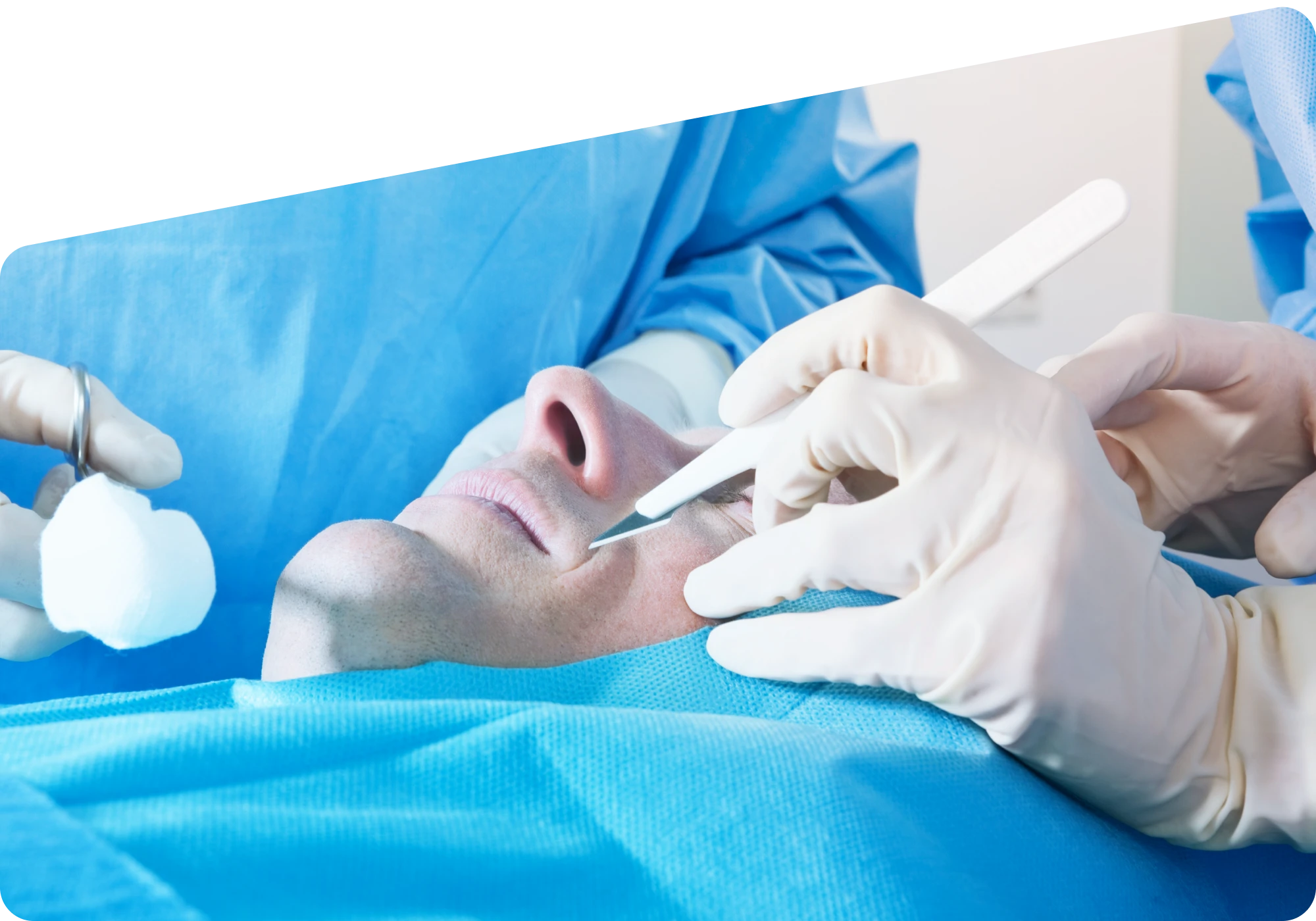
The deviated nasal septum surgery procedure, or septoplasty, repositions and reshapes selected cartilage and bone to create a more open nasal airway. It is usually performed through incisions inside the nose, although the approach varies with the anatomy and any planned additional procedures.
The team provides appropriate anesthesia and prepares the nasal passage.
The surgeon accesses the septum and reshapes, moves, or selectively removes deviated cartilage or bone while preserving nasal support.
The tissues are repositioned; stitches, internal splints, or packing may be used when needed.
The patient is monitored after surgery, and many people return home the same day with postoperative instructions.
Septoplasty is not the same as rhinoplasty, which changes the external nose, or endoscopic sinus surgery, which addresses sinus drainage pathways. If chronic sinus disease is also present, learn more about when sinus surgery is considered. Treating sinus inflammation may remain necessary even after the septum is corrected; the related options are explained in sinusitis treatment.
Deviated nasal septum surgery recovery time varies with the operation and the patient's healing. Many patients need approximately one to two weeks for early recovery, but congestion can persist longer and the internal tissues continue healing for months.
Period | What you may expect |
|---|---|
First few days | Nasal stuffiness, mild discomfort, swelling, or blood-tinged discharge |
Around the first week | Some patients return to desk-based activities if comfortable and cleared by their surgeon |
Following weeks | Breathing gradually becomes easier as swelling settles; restrictions on exercise and lifting may continue |
About 3–6 months | The nasal tissues are generally more stable, although healing varies and may continue beyond this period |
Recovery after septoplasty is not a promise of immediate breathing improvement. Temporary swelling or splints can make the nose feel blocked at first. The surgeon will advise when to return to work, exercise, travel, and nose blowing based on the actual procedure.
To support septoplasty recovery, follow instructions about resting with the head elevated, avoiding forceful nose blowing, using prescribed nasal care, and attending follow-up visits. Contact the surgical team promptly for heavy or persistent bleeding, fever with worsening pain, or breathing concerns after surgery.
Complications of deviated nasal septum, when symptoms are significant, may include persistent obstruction, mouth breathing, nasal dryness, recurrent nosebleeds, or disturbed sleep. These problems do not occur in everyone and can have other causes.
Potential deviated nasal septum surgery complications include bleeding, infection, an adverse reaction to anesthesia, continued nasal blockage, a hole in the septum (septal perforation), changes in nose shape, and temporary changes in sensation or smell. Some people need further treatment if symptoms persist.
The Mayo Clinic overview of septoplasty discusses the procedure, expected healing, and potential risks. Before surgery, ask your specialist which risks and benefits apply to your anatomy and medical history.
If nasal blockage is affecting your breathing or daily routine, you can request an ENT appointment through a phone call or online booking form for an assessment at the Abu Dhabi branch.
Nasal septum deviation is an off-center septum that may cause ongoing nasal blockage, reduced airflow, and disrupted sleep, but it often causes no symptoms. Treatment depends on whether the deviation is truly responsible for the obstruction and whether inflammation or another nasal problem is also present. Medical care can relieve associated congestion, while septoplasty may help selected patients with significant structural blockage. An ENT examination is the first step toward an individualized treatment decision.
Medically reviewed by Dr. Ahmed Morsi.
Medical Disclaimer: The information in this article is for health education purposes only and does not replace a visit to a doctor or consultation with a qualified specialist. Magrabi Health doctors recommend seeking medical evaluation for an accurate diagnosis and appropriate treatment plan.
Mayo Clinic - Septoplasty: Overview, Risks and Recovery
The BMJ - Septoplasty Versus Medical Management: Randomized Clinical Trial (2023)
DHA – Clinical Guidelines for Virtual Management of Common Cold

Nasal Polyps Treatment: Medicines, Surgery and Recurrence

Nasal Polyps Symptoms: Signs, Causes and When to Seek Care
Sinus Surgery: When Is It Needed and What to Expect?

Sinus Headache: Causes and How to Tell It Apart from Migraine

Sinusitis Symptoms: Early Signs, Types and When to See an ENT