Refractive errors in children can be easy to miss. Learn the early home and school signs, when to seek urgent care, and what to expect from a complete pediatric eye exam.
Last Update: 15/12/2025
Refractive errors in children—myopia, hyperopia, and astigmatism—often develop quietly and may show up as squinting, sitting too close to screens, headaches after reading, or a sudden drop in school performance.
Because kids may not realize their vision is blurred, early detection relies on parent and teacher observations plus a complete eye exam.
Timely glasses can reduce eye strain and support learning. This guide explains early warning signs, red flags, what to expect in an exam, and next steps in UAE.
When blurry vision doesn’t improve, it’s worth checking — book a comprehensive eye examination at Magrabi Hospitals in the UAE to confirm the cause and plan safe, targeted care.
Refractive errors happen when the eye does not focus light clearly onto the retina, leading to blurred distance vision, blurred near vision, or distorted vision.
The most common types you’ll hear from your eye doctor:
A simple way to think about it is “what’s blurry?”
Type | What’s usually blurry | Typical child “clues” |
Myopia (Nearsightedness) | Far vision | Can’t see the board, sits close to TV, squints |
Hyperopia (Farsightedness) | Near vision (sometimes both) | Avoids reading, headaches after homework |
Astigmatism | Vision at all distances can be distorted | Head tilt, squinting, eye strain |
Children may not complain because blurred vision can feel “normal” if it develops gradually or affects one eye more than the other. That’s why observation plus a proper exam matters.
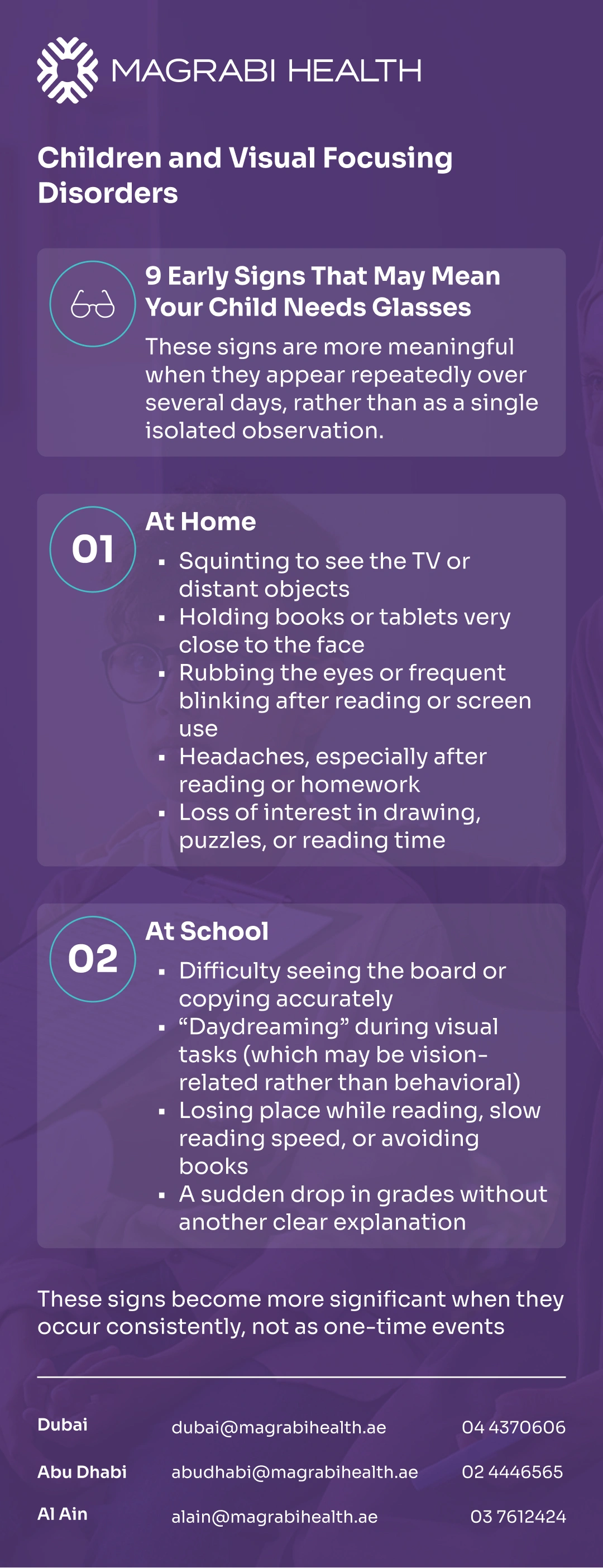
These early clues are practical and commonly linked to refractive errors in children, especially when they repeat consistently.
Look for a repeated pattern over 1–2 weeks, not one isolated day.
Squinting to see the TV or distant objects
Holding books/tablets very close to the face
Rubbing eyes or blinking excessively after visual tasks
Complaining of headaches, especially after reading
Losing interest in drawing, puzzles, or reading time
Johns Hopkins notes that squinting and sitting too close to screens are classic “real-world” clues in children.
A short conversation with the teacher can be very revealing.
Trouble seeing the board or copying accurately
“Daydreaming” during visual tasks (it can be vision, not behavior)
Losing place while reading, slower reading speed, avoidance of books
A sudden drop in grades without another clear cause
For more information about blurry vision in children, visual focusing problems, and available care options, speak with an eye specialist or visit our Refractive and Cornea Care service page at Magrabi Hospitals in the UAE.
Most refractive errors in children are not emergencies, but some patterns should be assessed promptly.
These warning signs can indicate something beyond routine glasses needs.
Sudden vision loss or rapidly worsening blur
Severe eye pain, strong light sensitivity, marked redness
New eye turn (squint/strabismus) or new double vision
A child consistently tilting the head to see (may signal astigmatism or other issues)
If you are unsure, it is safer to be checked—especially when symptoms are sudden or one-sided.
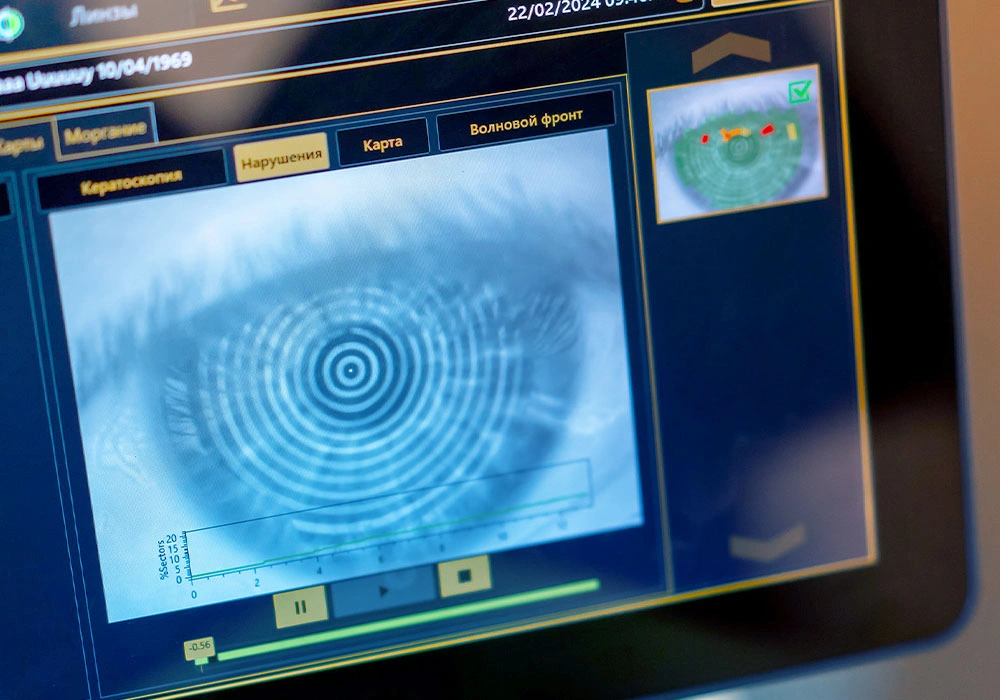
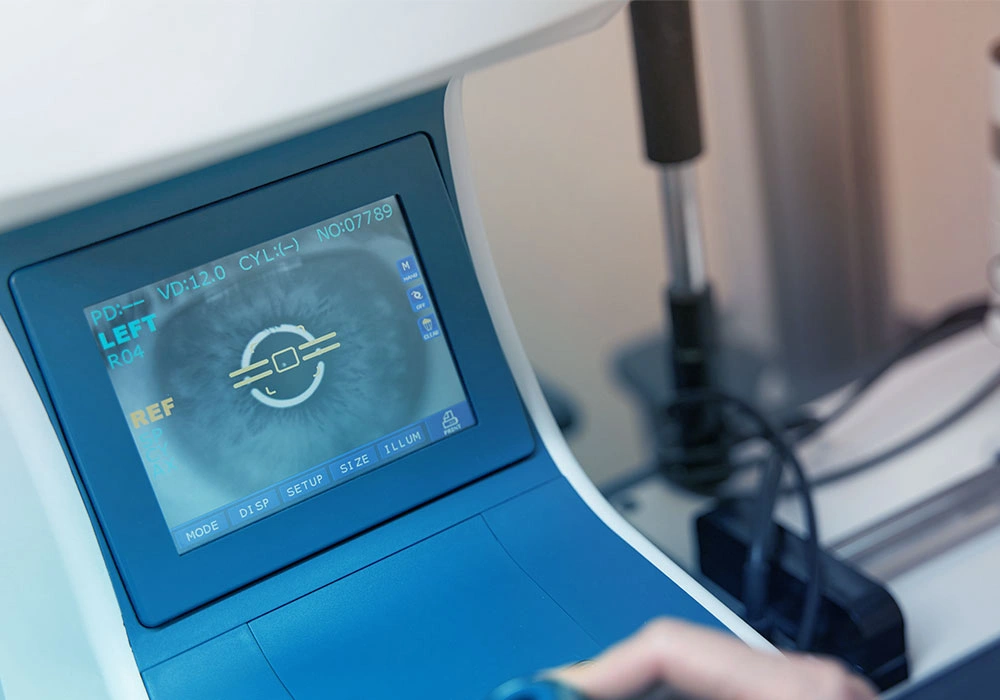
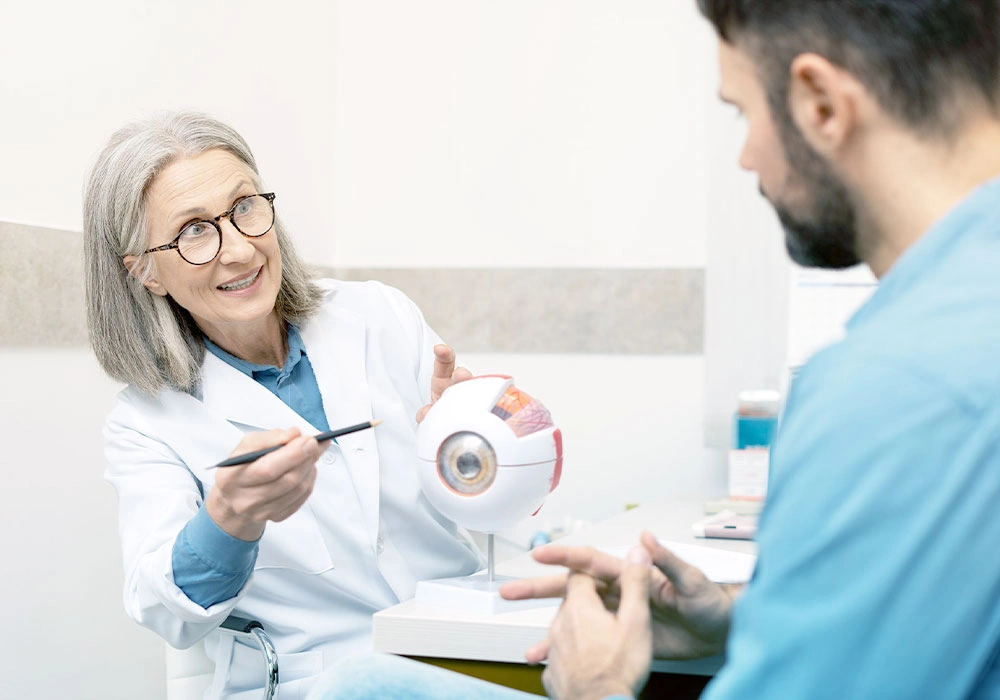
A children’s eye exam for refractive errors in children is more than “reading letters.” The aim is to assess vision, focusing, eye alignment, and overall eye health in an age-appropriate way.
This is the usual flow in clinic, adjusted to age and cooperation.
Vision test using age-appropriate charts (pictures/shapes/letters)
Refraction (measuring the glasses prescription)
Eye alignment checks (to rule out strabismus)
Eye health evaluation (front of eye and retina)
Your eye doctor may recommend drops to widen the pupil to measure refractive error more accurately in children. AAPOS specifically notes that a complete exam (often with drops) is the best way to detect refractive errors and obtain an accurate measurement.
Once the diagnosis is clear, the next steps are usually simple, practical, and child-friendly. The goal is to improve vision comfortably and build habits that reduce eye strain.
A well-fitted pair makes children far more likely to wear their glasses consistently. In practice, this means:
The frame sits securely without sliding down or pinching the nose/ears.
Lenses are chosen to match the prescription and the child’s daily activities (school, sports, screen use).
A follow-up visit is planned to confirm comfort, clear vision, and good adaptation.
There are no guarantees—every child is different—but some habits are supported by evidence. One consistent finding is that spending more time outdoors is linked to a lower risk of developing myopia and a smaller “shift toward myopia,” especially in children who are not yet myopic.
To make this practical day to day:
Encourage outdoor play most days (safe daylight exposure).
Use the 20–20–20 rule during near work (every 20 minutes, look 20 feet away for 20 seconds).
Keep reading and screen distance reasonable; avoid long, close-up posture.
Balance screen time with regular breaks and outdoor time.
If you suspect your child may need glasses, follow this order:
Write down 2–3 repeated signs (e.g., squinting + headaches after homework).
Ask the teacher what they notice in class.
Book a full eye examination (not just a quick vision screening).
Bring school feedback, any previous prescriptions, and notes about screen/reading habits.
After glasses are prescribed, reassess comfort and school performance over 2–4 weeks.
If your child shows signs linked to refractive errors in children—such as squinting, sitting very close to screens, avoiding reading, or headaches after school—it is reasonable to arrange a complete pediatric eye exam.
In many cases, a simple glasses prescription improves comfort, concentration, and confidence without unnecessary treatment.
The key is not guessing at home, but confirming the cause with a proper clinical assessment.
This content is educational and not a diagnosis. For sudden vision changes, severe pain, or new eye turning, seek urgent eye care.
American Association for Pediatric Ophthalmology and Strabismus (AAPOS) – Refractive Errors in Children AAPOS
American Academy of Ophthalmology (AAO) – Child eye problems not to ignore (includes head tilt) AAO
AAO Journal – Time outdoors and reduced myopia risk aaojournal.org
PubMed (AAO) – Time outdoors and myopia association PubMed
Johns Hopkins Medicine – Signs a child may need glassesJohns Hopkins Medicine.
Reviewed by Dr. Moataz Sallam, Consultant Cataract, Refractive and Anterior Segment Surgeries, with 20+ years of experience in phaco-refractive and cornea care in Dubai and Al Ain.