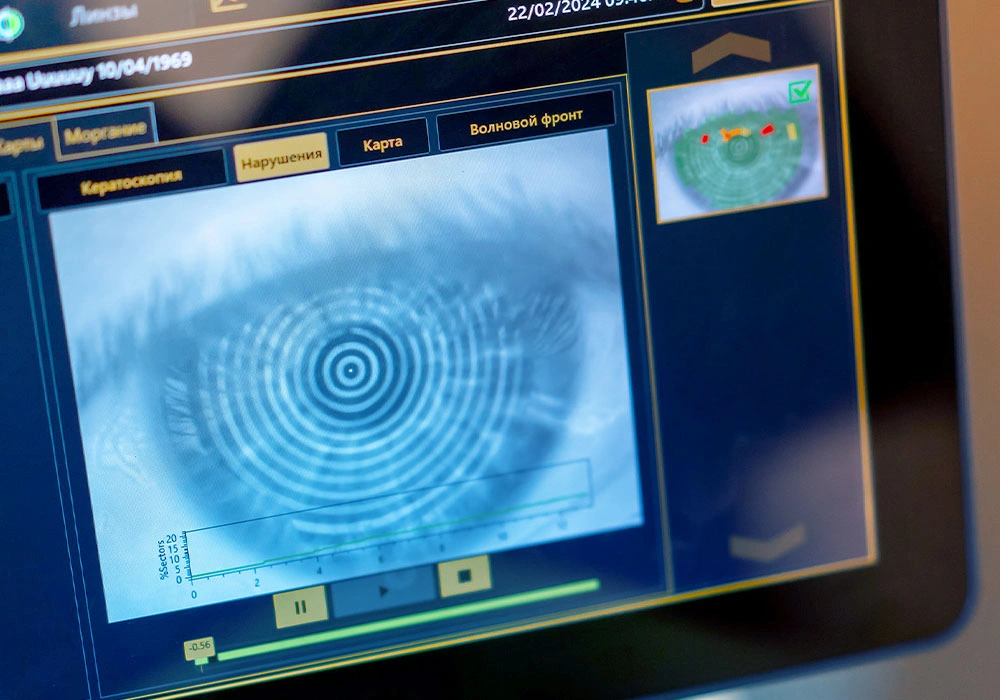
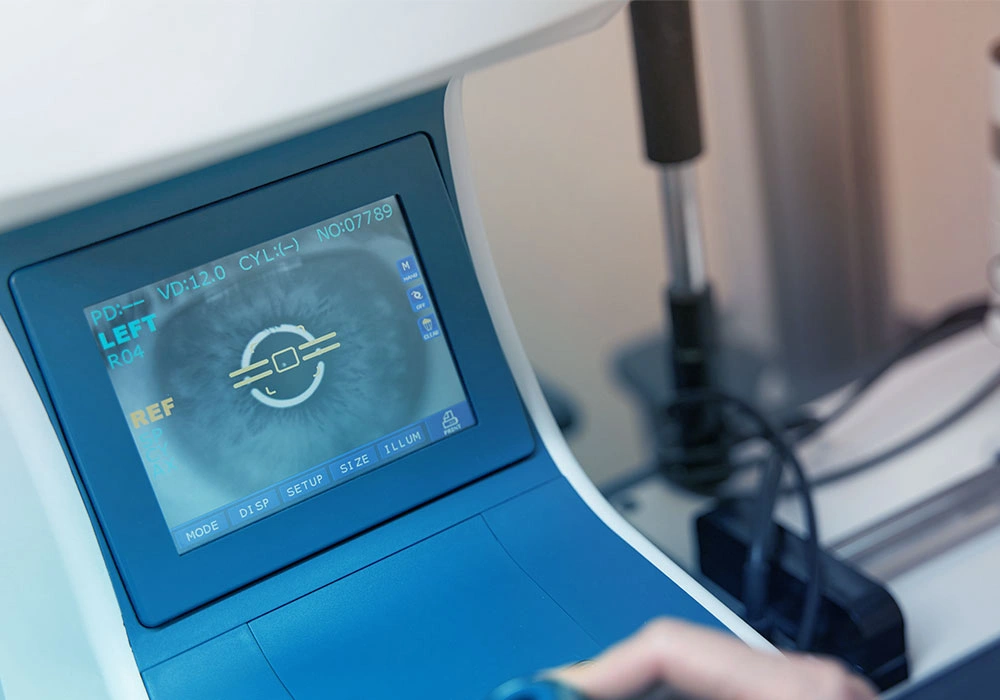
Blurry vision can be a simple refractive error or an early warning sign of a more serious eye condition. This guide explains key causes, red-flag symptoms, and when you should book a comprehensive eye examination.
Last updated: 12/12/2025
Blurry vision at any age can be confusing and worrying. In many cases, it is simply a sign of refractive error such as myopia, hyperopia, astigmatism or presbyopia, which can be easily corrected with glasses, contact lenses or refractive surgery.
However, sudden or persistent blurred vision may also be an early warning of more serious eye conditions affecting the cornea, lens, retina or optic nerve.
This article explains common causes of blurry vision and helps you know when it’s simple refractive error and when to worry.
Don’t ignore persistent blurry vision — book a comprehensive eye examination at Magrabi Hospitals & Centers in the UAE and explore a safe, tailored plan to protect your sight.
Blurry vision is a broad term patients use when things no longer look sharp or clear. You may notice that words on a screen or road signs look hazy, edges seem less defined, or you need to strain to focus.
Blurred vision can affect one eye or both, can appear only at certain distances (near, far or both), and may be constant or come and go during the day.
It is not a diagnosis by itself, but a symptom that can result from simple refractive errors or from more serious eye conditions that need prompt assessment.
Key Symptoms of Blurry Vision
Blurry vision often shows up first in small, practical changes you notice in daily life. Common symptoms include:
Feeling that objects no longer look sharp or well-defined.
Struggling to read small print on your phone, laptop or books.
Difficulty recognising faces across the room.
Finding road signs unclear until you move closer while driving.
Needing to move things closer or farther away to bring them into focus.
Experiencing eye strain or a heavy feeling in the eyes after screens or reading.
Having headaches that are worse after visual tasks such as reading or computer work.
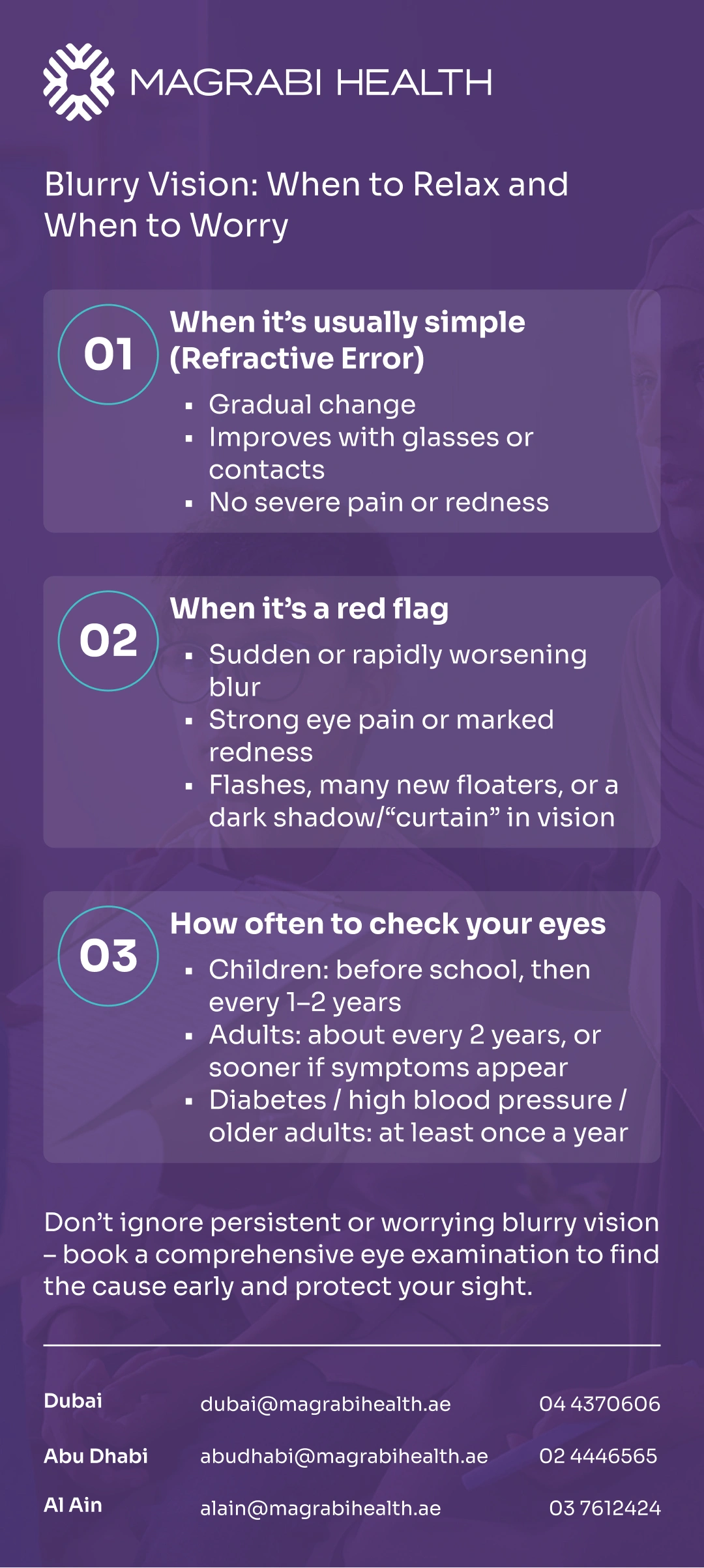
For many people, blurry vision is simply the result of a refractive error – the eye’s focusing system not bending light accurately.
In this situation, the blur is usually gradual rather than sudden, often improves when you put on your glasses or contact lenses, and is more noticeable at specific distances, such as when reading or driving.
There is typically no severe pain, redness or sudden loss of vision. In these cases, a routine eye examination and an updated prescription are often enough to restore clear sight.
Not all blurry vision is harmless. Some patterns of blurred vision suggest an eye emergency or a problem that should be assessed without delay by an eye specialist. Pay particular attention if you notice:
Sudden onset of blurry vision in one eye or both eyes.
A dramatic change in vision over hours or days, rather than gradual over months.
Blurry vision with severe eye pain, redness or marked light sensitivity.
Flashes of light, new floaters or a dark “curtain” or shadow in part of your vision.
Distortion of straight lines, or a dark/grey spot in the centre of your sight.
Blurry vision together with headache, weakness, difficulty speaking or imbalance.
In children: squinting, one eye turning in or out, holding screens very close, or frequent eye rubbing.
If any of these red-flag symptoms appear, they should be treated as a medical priority rather than waiting for the next routine eye check.
Blurry vision can mean different things depending on your age and overall health. In general:
Blurry vision is most often due to refractive errors such as myopia. It can quietly affect school performance, reading, sports and confidence if not picked up early through regular eye checks.
Blurred vision frequently combines uncorrected refractive error with digital eye strain from long hours on screens. In some cases, early eye disease or dry eye may also contribute, especially in office workers.
New or changing blurry vision may signal cataract, glaucoma or retinal problems, particularly in people with diabetes or hypertension. At this stage, regular comprehensive eye exams are essential to protect long-term vision.
The right treatment for blurry vision depends on what your eye specialist finds during the examination. In many cases, correcting a refractive error is enough; in others, treating an underlying eye disease is essential. Common options include:
The simplest and safest way to correct most refractive errors such as myopia, hyperopia, astigmatism and presbyopia. An accurate, up-to-date prescription can often restore comfortable, clear vision for daily tasks.
A good choice for people who prefer not to wear glasses all the time or need wider visual fields for sports or specific jobs. They require proper fitting, hygiene and follow-up to avoid infections or dryness.
Suitable for selected adults with stable refractive errors and healthy eyes. These procedures reshape the cornea to reduce dependence on glasses or contact lenses. Candidacy is decided only after careful testing and counselling.
When blurry vision is caused by cataract, glaucoma, diabetic eye disease, macular problems or severe dry eye, the priority is to treat that condition with the appropriate medical, laser or surgical approach.
Managing screen time, using proper lighting, taking regular visual breaks, controlling diabetes and blood pressure, and attending scheduled eye checks all help protect your vision over the long term.
For more details about the causes of blurry vision, refractive errors and available treatment options, speak with your eye specialist or visit our Refractive and Cornea Care service page at Magrabi Hospitals in the UAE.
The ideal frequency of eye examinations varies with age, vision status and general health; the guide below shows how often most people should have their eyes checked.
Group | Recommended Frequency | Notes |
Children and Teenagers | Before school, then every 1–2 years | More often if there is blurry vision, squinting, headaches, or family history of eye problems. |
Adults with no known eye disease | Every 2 years | Have an earlier exam if you notice new blurry vision, eye strain or headaches. |
Adults with glasses/contact lenses or past refractive surgery | Every 1–2 years | Keeps prescriptions updated and monitors cornea, lens and retina health. |
People with diabetes or hypertension | At least once a year | Eye conditions can develop silently and affect the retina and optic nerve. |
Older adults (around 60+ years) | About once a year | To screen for cataract, glaucoma and age-related macular changes |
Blurry vision is common, but it should never be ignored. Sometimes it is a simple refractive error; at other times it can be an early sign of serious eye disease.
If you notice persistent or worrying changes in how clearly you see, schedule a full eye examination for refractive errors at Magrabi Hospitals & Centers in the UAE and discuss a tailored treatment plan with your eye specialist.
This article provides general educational information about cataract surgery in Ain and is not a substitute for a personal medical consultation, diagnosis, or treatment plan. Individual cases vary. Always discuss your specific condition and treatment options with a qualified ophthalmologist.
National Eye Institute (NEI). Refractive Errors.
https://www.nei.nih.gov/learn-about-eye-health/eye-conditions-and-diseases/refractive-errors (National Eye Institute)
Cleveland Clinic. Blurred Vision: Symptoms, Causes & Treatments.
https://my.clevelandclinic.org/health/symptoms/24262-blurred-vision (Cleveland Clinic)
Moorfields Eye Hospital (Moorfields Private). What Causes Blurred Vision?
https://www.moorfields.nhs.uk/private/about-moorfields-private/blog-articles/what-causes-blurred-vision (moorfields.nhs.uk)
Reviewed by Dr. Moataz Sallam, Consultant Cataract, Refractive and Anterior Segment Surgeries, with 20+ years of experience in phaco-refractive and cornea care in Dubai and Al Ain.