If you have a high prescription, thin corneas, dry eye concerns, or you have been told that LASIK may not be the right option for you, lens implant surgery may be one of the vision correction pathways to discuss with an ophthalmologist. At Magrabi Health, the first step is not choosing a procedure, but having a detailed refractive eye assessment to check your prescription, cornea, eye pressure, retina, anterior chamber measurements, and overall eye health.
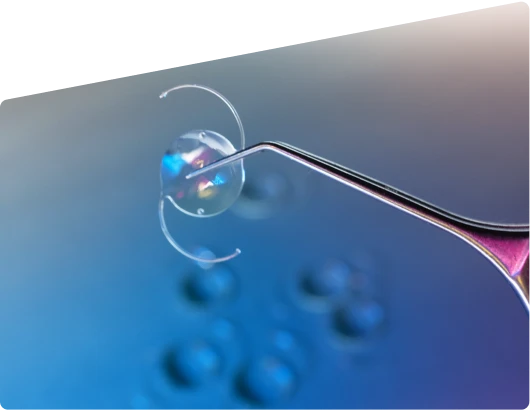
Lens implant surgery may include an implantable contact lens, also known as a phakic lens implant, which is placed inside the eye to help correct vision while the natural lens usually remains in place. Suitability depends on the eye structure, prescription, age, medical history, and examination results.
Magrabi Health combines refractive eye care expertise with trusted UAE access. The Dubai branch is JCI-accredited and rated 4.6 out of 5 stars on Google based on 775 patient reviews, while lens implant surgery consultations, implantable contact lens suitability checks, and refractive assessment pathways can also be arranged through Magrabi Health branches in Abu Dhabi, Al Ain, and Mirdif, depending on appointment availability, doctor availability, and treatment planning needs.
Start with a refractive eye assessment to understand whether lens implant, implantable contact lens, LASIK, PRK, or another vision correction pathway may be suitable for your eyes.

Lens implant surgery requires careful assessment because it depends on more than prescription strength alone. The doctor must evaluate the cornea, eye pressure, internal eye measurements, retina, visual needs, and overall eye health before confirming whether an implantable contact lens or another refractive option is suitable.
Detailed refractive assessment for patients considering lens implant, implantable contact lens, or alternatives to LASIK.
Suitability checks for high prescription, thin corneas, dry eye concerns, or cases where laser eye surgery may not be the preferred option.
Doctor-led planning based on prescription stability, cornea health, eye measurements, anterior chamber depth, and medical history.
UAE branch access across Magrabi Health locations, including Dubai, Abu Dhabi, Al Ain, and Mirdif, depending on doctor availability and case needs.
Clear WhatsApp guidance before booking, helping patients choose the suitable branch and refractive consultation pathway.
Lens implant surgery is not suitable for everyone. A full refractive assessment is needed to determine the right option. A lens implant assessment may be relevant if:
You have a high degree of nearsightedness, farsightedness, or astigmatism.
You were told that your cornea may be too thin for laser eye surgery.
You are looking for a vision correction option that does not reshape the cornea.
You are exploring an alternative to LASIK or PRK.
You have a stable prescription and want to understand long-term vision correction options.
You are not comfortable relying on glasses or external contact lenses.
You need assessment for an implantable contact lens.
You want to understand whether your eye structure can safely support a lens implant.
You need a refractive consultation before choosing between LASIK, PRK, or lens-based correction.

Lens implant surgery at Magrabi Health starts with a refractive eye assessment because every patient’s eye structure, prescription, lifestyle, and medical history are different. The doctor first checks whether lens-based correction is suitable before recommending any surgical pathway.
Depending on the assessment, lens implant surgery care may include:
An implantable contact lens may be considered for selected patients who want vision correction but may not be suitable for LASIK or PRK. The doctor checks prescription level, cornea thickness, eye pressure, anterior chamber measurements, retina status, and general eye health before recommending this option.
A phakic lens implant is placed inside the eye while the natural lens usually remains in place. This approach may be discussed for selected patients with high prescriptions or cases where corneal laser treatment is not preferred. Suitability must be confirmed after detailed measurements.
Patients with high myopia, hyperopia, or astigmatism may need a more detailed refractive assessment before choosing a treatment option. The doctor may compare lens implant surgery with laser eye surgery, glasses, or other correction pathways based on safety and suitability.
Some patients may not be ideal candidates for LASIK because of cornea thickness, cornea shape, dry eye, prescription level, or other factors. In these cases, an implantable contact lens may be discussed as one possible alternative if the internal eye measurements are suitable.
Some patients with astigmatism may need a specific lens design or additional planning. The doctor explains whether a toric implantable contact lens or another refractive approach may be suitable after measuring the eye and reviewing visual needs.
Before any lens implant procedure, the eye needs careful measurements. These may include refraction, cornea mapping, eye pressure, anterior chamber depth, pupil size, retina evaluation, and lens clarity checks. The treatment plan depends on these results.
The doctor may ask about your glasses or contact lens use, prescription stability, visual goals, dry eye symptoms, night vision concerns, previous eye surgery, medical conditions, and daily activities.

Your vision and prescription are checked to understand the degree of correction needed and whether your prescription has been stable enough for refractive treatment planning.

The doctor checks the cornea shape, thickness, eye pressure, anterior chamber depth, pupil size, lens clarity, and retina status to determine whether lens implant surgery may be safe and suitable.

The doctor explains whether an implantable contact lens, LASIK, PRK, another refractive procedure, or non-surgical correction may be more suitable. You may also receive guidance about preparation, expected recovery, cost factors, and follow-up requirements.

Choosing the right refractive doctor and UAE branch is an important step, especially if you are comparing lens implant surgery, implantable contact lens, LASIK, PRK, or another vision correction option. Doctor availability, branch availability, language, and case needs should be confirmed before booking.

Cataract & Pediatric Ophthalmology Consultant | Eye Surgeon for Cataract & Children's Vision in Dubai

Cornea & Refractive Surgery Expert | Leading LASIK Specialist & Cornea Surgeon in Dubai

As one of the best LASIK doctors in Abu Dhabi, Dr. Hesham Hamdy is renowned for his work in cornea and refractive surgery. Patients seeking a trusted LASIK clinic in Abu Dhabi turn to him for bladeless LASIK and wavefront-guided vision correction with exceptional outcomes.

Consultant Ophthalmologist | Cataract, Cornea & Refractive Surgery Expert
I had advanced cataracts that made driving and reading nearly impossible. The lens implant surgery at Magrabi was life-changing. The team used phacoemulsification with a premium intraocular lens, and my vision is now sharper than it has been in decades. Recovery was smooth with minimal discomfort. I'm truly grateful.
Maha Al-Tayer
I suffered from high myopia and astigmatism and wasn't suitable for LASIK. The team recommended an ICL (Implantable Collamer Lens) procedure instead. The surgery itself took about 15 minutes, and within a week, my vision was massively improved. I can finally go about my daily life without glasses. Professional and reassuring throughout.
Sultan Al-Muhairi
I've worn glasses since childhood and was tired of the hassle. After a comprehensive eye exam, I underwent lens implant surgery at Magrabi Dubai. The staff prepared me well, and the procedure was quick and painless. My vision improved almost immediately. Now I can study and work without any inconvenience. Highly recommended.
Hind Al-Ketbi
My father had dense cataracts and was worried about surgery. The team at Magrabi explained every step clearly and performed a successful lens implantation. He noticed clearer vision the very next day. The post-operative care was excellent, and he's now enjoying reading and driving again. Truly a top-tier facility.
Obaid Al-Suwaidi
I was nervous about eye surgery, but the team made me feel completely at ease. They performed a thorough examination and selected the perfect intraocular lens for my condition. The surgery was smooth, and recovery was faster than expected. Now I see the world more clearly than I have in years. Absolutely worth it.
Aisha Al-Blooshi

At Magrabi Health, lens implant surgery begins with a detailed eye assessment and a personalised treatment plan based on each patient’s vision needs and eye condition. Hear from patients who underwent lens implant treatment and learn about their experience throughout the consultation, procedure, recovery, and follow-up care.

Preparing a few details before your visit can help the doctor understand your vision needs and plan the right next step.
Before your appointment, it may help to:
Bring your current glasses or contact lens prescription if available.
Share previous LASIK, PRK, cornea, or refractive assessment reports if you have them.
Tell the doctor if you wear contact lenses and how often you use them.
Mention any dry eye symptoms, night glare, halos, eye pain, redness, or previous eye problems.
Share any history of eye surgery, eye injury, cataract, glaucoma, retinal disease, or keratoconus.
Tell the doctor about current medications, allergies, or medical conditions.
Ask whether you need to stop wearing contact lenses for a period before the assessment.
Prepare questions about suitability, recovery, cost factors, follow-up, and alternatives to lens implant surgery.

If you are considering lens implant surgery, implantable contact lens, LASIK, PRK, or another refractive option, do not choose a procedure based on search results alone. The right first step is a detailed refractive eye assessment with an ophthalmologist.
Send a quick WhatsApp message and the team can guide you to the suitable UAE branch, available doctor, lens implant consultation, and appointment options based on your prescription, case, and location.


LASIK Age Limit: Am I Too Young or Too Old for LASIK?

LASIK Eye Surgery Cost in the UAE: What Really Affects the Price