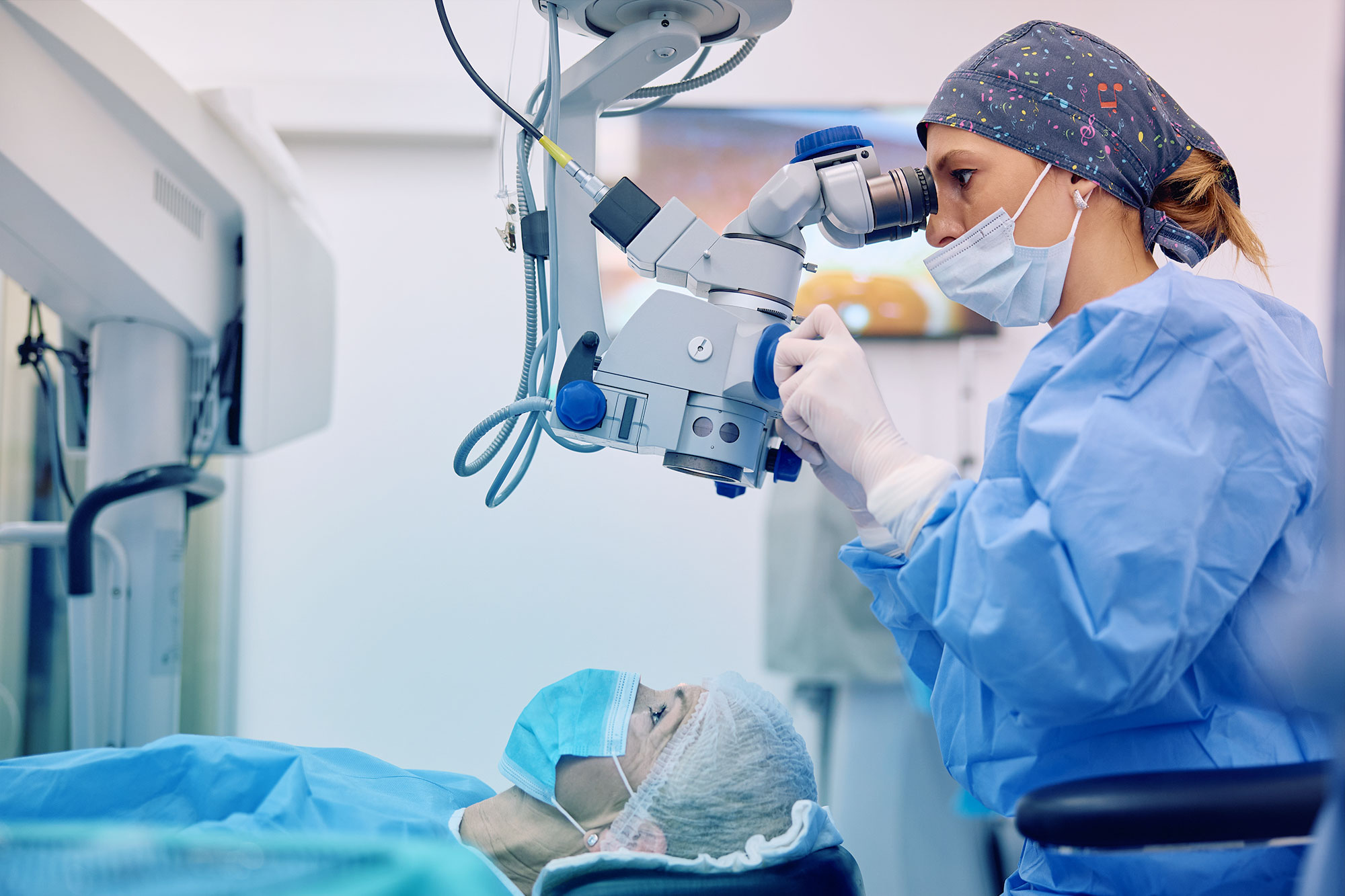
A lasik procedure is a laser vision correction treatment that reshapes the cornea to improve how light focuses inside the eye. It usually includes detailed eye measurements, numbing eye drops, creation of a corneal flap, excimer laser reshaping, and flap repositioning. A comprehensive eye exam is essential because the exact treatment plan and suitability depend on each patient’s eyes.
Last Updated: 23/09/2026
A lasik procedure is a laser vision correction surgery that reshapes the cornea so light focuses more accurately on the retina. The procedure steps include numbing the eye, creating a thin corneal flap, reshaping the underlying cornea with an excimer laser, and repositioning the flap.
Before surgery, a comprehensive eye exam, corneal topography, and pachymetry help determine whether the patient is a suitable LASIK candidate. The LASIK process also includes follow-up care after treatment to monitor healing and visual recovery.
Although the laser treatment itself is relatively brief, the full LASIK process starts before the day of surgery with a comprehensive eye exam and continues afterward with follow-up and visual recovery.
Magrabi Health ophthalmologists emphasize that the lasik eye surgery procedure should begin with confirming whether the patient is a suitable LASIK candidate before planning treatment.
If you are considering LASIK and want to understand how treatment is assessed and planned, learn more about LASIK Surgery at Magrabi Health, including evaluation, treatment, and vision correction options.
LASIK is a refractive procedure used to correct common refractive error, including myopia, hyperopia, and astigmatism. The aim is to reshape the cornea so incoming light is focused more accurately on the retina.
During a lasik eye surgery procedure, the surgeon creates a thin corneal flap, treats the underlying corneal tissue with an excimer laser, and then places the flap back into position. The exact treatment pattern is based on measurements taken before surgery.
This sequence forms the core of the lasik surgery procedure, although the exact treatment plan may vary according to the patient’s refractive error, corneal measurements, and ophthalmologist’s assessment.
LASIK does not make every patient independent of glasses for every visual task, and it does not stop normal age-related changes in the eye. This is why candidacy assessment and realistic expectations are important parts of the lasik surgery procedure.
Patients who want to understand suitability, possible side effects, and the factors doctors assess before treatment can also read Is LASIK Eye Surgery Safe?.
lasik eye surgery preparation begins with a comprehensive eye exam rather than on the day of the laser treatment. The ophthalmologist needs detailed information about the cornea, refractive error, tear film, eye health, and medical history before deciding whether LASIK is appropriate.
The evaluation may include:
Refraction testing to confirm the type and degree of vision correction needed.
Corneal topography to map the shape and regularity of the cornea.
Pachymetry to measure corneal thickness.
Assessment of the tear film and signs of dry eye.
Examination of the front and back of the eye.
Review of previous eye conditions, surgery, medications, and general health.
Discussion of visual needs, expectations, and alternatives if LASIK is not suitable.
Magrabi Health doctors emphasize that lasik eye surgery preparation is not only about getting ready for the day of treatment. The preoperative assessment helps determine whether LASIK is appropriate for the patient and whether another vision correction option should be considered.
Contact lenses can temporarily change corneal shape. The U.S. Food and Drug Administration advises patients to follow their doctor’s instructions about stopping contact lens wear before the baseline evaluation. It also recommends discussing eye and medical history, medications, and any questions about risks and benefits before surgery.
The lasik procedure steps follow a planned sequence designed to expose the tissue that needs reshaping, apply the programmed laser treatment, and then restore the corneal surface. If you are searching for lasik eye surgery step by step or step by step lasik surgery, the main stages are below.
Before treatment begins, numbing eye drops are placed in the eye. An instrument is used to keep the eyelids open so the patient does not need to worry about blinking during the laser eye procedure.
The surgeon confirms alignment and positioning before moving to the next stage. Some patients may notice pressure or unusual sensations even though the surface of the eye has been numbed.
A thin corneal flap is created at the front of the cornea. In femtosecond LASIK, a femtosecond laser is used for this step. Other LASIK techniques may use a mechanical microkeratome.
The flap remains attached by a small hinge so it can be lifted and then repositioned after the corneal reshaping is complete.
The surgeon gently lifts the corneal flap to expose the underlying corneal tissue. This provides access to the area that will be reshaped by the excimer laser.
The National Eye Institute explains that measurements and a detailed image of the cornea are used to guide the laser treatment before the flap is returned to its position.
The excimer laser removes microscopic amounts of corneal tissue according to the treatment plan. The pattern differs depending on whether the refractive error is myopia, hyperopia, or astigmatism.
Modern laser platforms may also use eye tracking to help maintain treatment alignment when small eye movements occur. The active laser treatment is only one stage of the full lasik process.
After the programmed corneal reshaping is complete, the surgeon carefully returns the flap to its original position. The edges are checked to make sure the flap is properly aligned.
The flap usually remains in place without stitches. Early healing begins soon after flap repositioning.
After the main lasik steps are complete, the patient rests briefly and receives postoperative instructions. These may include prescribed eye drops, avoiding eye rubbing, using an eye shield when advised, and attending follow-up visits.
The surgeon will explain what symptoms are expected and which changes require medical attention.
If you have questions about LASIK Surgery or want to know whether a refractive eye assessment may be appropriate for you, contact the Magrabi Health team on WhatsApp for guidance on the appropriate UAE branch or specialist.
If you are wondering how long a lasik surgery takes, the surgery itself is usually brief. The U.S. Food and Drug Administration states that LASIK surgery should take less than 30 minutes, although the total time at the clinic is longer because preparation, checks, and postoperative instructions are also required.
The exact timing varies with the treatment plan, the technology used, and whether one or both eyes are being treated. The laser application itself is only one stage of the full appointment.
The eye is numbed with anesthetic drops before treatment, so significant pain is not expected during the laser stage. However, patients may feel pressure, especially during the flap-creation stage, as well as awareness of lights or movement.
After treatment, temporary burning, itching, watering, a gritty sensation, or mild discomfort may occur as the eye begins to heal. Patients should follow the ophthalmologist’s aftercare instructions and report severe or worsening pain rather than assuming it is part of normal recovery.
Immediately after the lasik eye surgery procedure, vision may be blurry or hazy and the eyes may feel irritated or watery. Patients are generally advised not to rub their eyes and to use prescribed drops and protective measures exactly as directed.
Magrabi Health doctors also clarify that visual recovery is part of the overall lasik process and can differ between patients, so early changes in vision should be assessed in the context of the ophthalmologist’s follow-up plan.
A follow-up visit is usually arranged soon after surgery so the ophthalmologist can check the corneal flap and early healing. Because vision may not be clear enough to drive safely immediately after treatment, patients should arrange transportation home.
Visual recovery differs from person to person. Many people notice improvement early, but clarity can fluctuate while the cornea heals. The National Eye Institute notes that the eye may continue healing for around two to three months after refractive surgery, so final visual stability is not judged only by the first day. Adhering to these guidelines supports faster and safer recovery and helps preserve visual outcomes.
Some irritation and temporary visual fluctuation can occur during early recovery, but certain symptoms need prompt medical review.
Contact your ophthalmologist if you experience:
Severe or increasing eye pain.
Vision that becomes noticeably worse instead of improving.
New or worsening symptoms that concern you.
Difficulty following the prescribed aftercare plan or using postoperative medication correctly.
The FDA advises contacting the doctor promptly if symptoms become worse rather than waiting for a scheduled visit.
Scheduled follow-up appointments are also important even when recovery seems comfortable. They allow the ophthalmologist to assess healing and address concerns before the patient resumes activities according to medical advice.
If you are considering LASIK and would like an ophthalmologist to assess your eyes, you can call Magrabi Health through a phone call or the booking form to choose a suitable appointment.
Understanding the lasik procedure can make the treatment pathway easier to follow, from initial corneal measurements and candidacy screening to flap creation, laser reshaping, and follow-up care. The exact experience and visual recovery vary between patients, so LASIK should be planned only after a comprehensive eye assessment. Magrabi Health ophthalmologists can evaluate whether LASIK or another vision correction option is appropriate for your eyes.
Medically reviewed By Magrabi Health Specialized Doctors
Medical Disclaimer: This article is for educational purposes only and does not replace professional medical advice. Always consult a qualified specialist
U.S. Food and Drug Administration — What Should I Expect Before, During, and After Surgery?
DHA Circular – Practice of Refractive Vision Surgery by LASIK