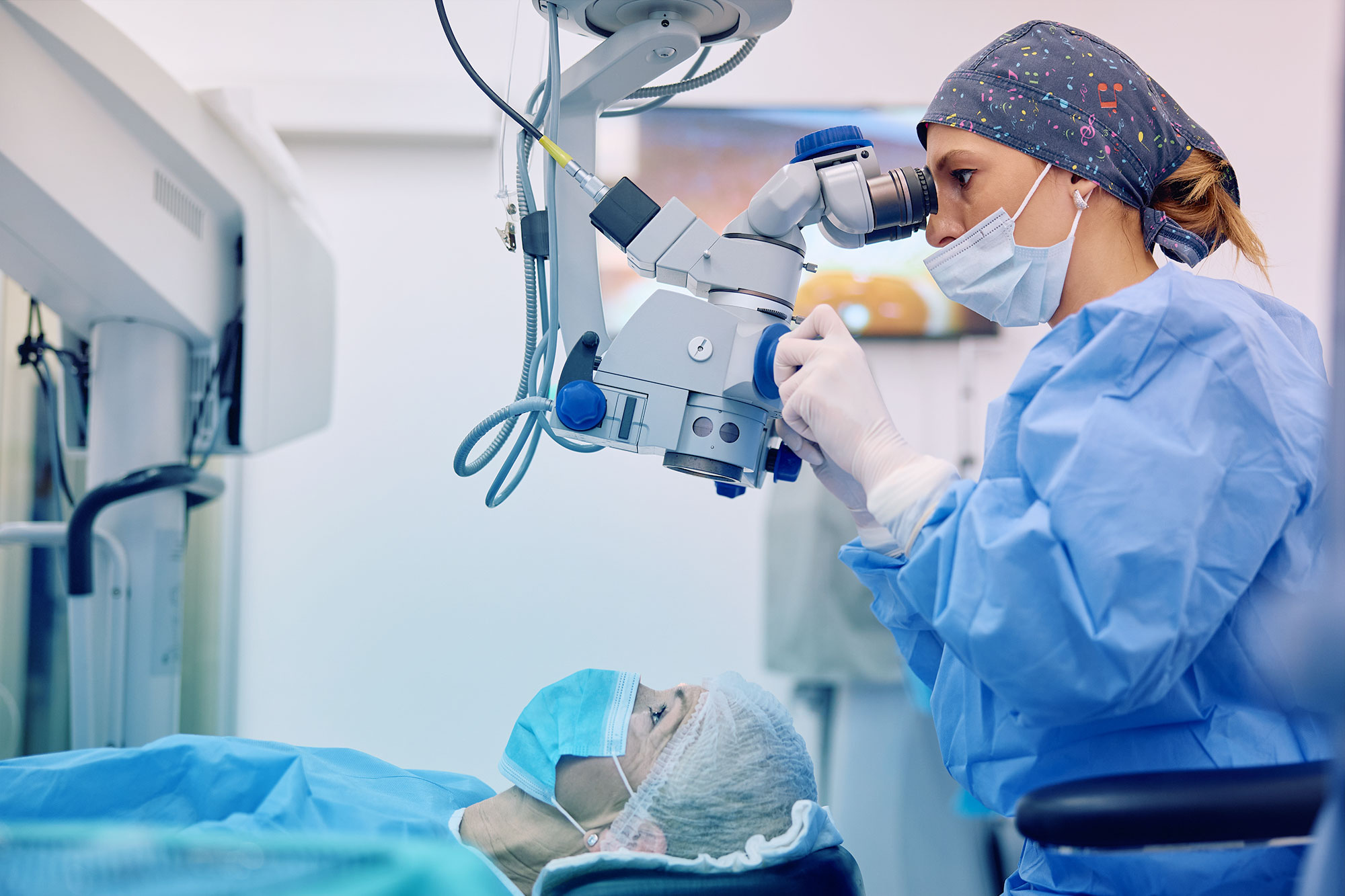
Ultra LASIK is an advanced approach to LASIK eye surgery that may use detailed eye measurements and customized treatment planning to correct refractive errors. This article explains the ultra lasik procedure, compares ultra lasik vs femto lasik, reviews possible side effects and suitability factors, and discusses Ultra LASIK options in Dubai and Abu Dhabi.
Last Updated: 12/10/2026
Ultra LASIK is a term used to describe advanced LASIK eye surgery that uses laser corneal reshaping to correct refractive errors. Depending on the technology used, it may also include detailed corneal measurements and customized treatment planning. Because Ultra LASIK does not refer to one universally standardized technique, suitability depends on a complete eye examination.
Before ultralasik surgery, an ophthalmologist assesses the eye prescription, corneal thickness, corneal shape, eye surface health, and overall eye health. These findings help determine whether LASIK or another form of laser vision correction is more appropriate.
Learn more about LASIK at Magrabi Health, including how suitability is assessed and how treatment is planned based on your individual eye measurements.
Ultra LASIK is a term used to describe an advanced form of LASIK vision correction that may combine detailed eye measurements with customized laser treatment planning. The procedure reshapes the cornea so that light focuses more accurately on the retina, helping correct refractive errors and reduce dependence on glasses or contact lenses.
Depending on the LASIK technology used, treatment planning may consider:
Eye prescription
Corneal shape
Corneal thickness
Optical characteristics of the eye
Individual vision correction needs
The term ultralasik may also appear as one word. However, Ultra LASIK does not refer to one universally standardized laser platform or treatment protocol.
For this reason, patients should ask which laser technology, corneal measurements, and treatment profile will be used. The ophthalmologist should determine suitability based on a complete eye examination rather than the treatment name alone.
The ultralasik procedure typically involves five main stages: a detailed eye assessment, customized treatment planning, creation of a corneal flap, corneal reshaping with an excimer laser, and repositioning of the flap. The exact measurements and laser settings may vary according to the technology used and the patient’s individual eye characteristics.
Before treatment, the ophthalmologist evaluates several factors, including:
Current eye prescription
Stability of the prescription
Corneal thickness
Corneal shape and regularity
Eye surface and dry eye status
Overall eye health
Refractive error
Visual needs and expectations
These measurements help determine LASIK suitability and whether another vision correction option may be more appropriate.
The surgeon uses the examination results to prepare the laser treatment.
Some customized LASIK systems can use additional optical or corneal measurements to create a treatment profile designed for the individual eye. However, the exact form of customized vision correction depends on the laser platform and clinical findings.
LASIK requires a thin corneal flap. In modern LASIK workflows, a femtosecond laser may be used to create this flap. The flap is then carefully lifted so the underlying corneal tissue can be treated.
An excimer laser removes microscopic amounts of corneal tissue according to the treatment plan.
This corneal reshaping changes the focusing power of the eye and can correct selected cases of myopia, hyperopia, and astigmatism.
After the laser treatment, the surgeon places the corneal flap back into position.
The eye then begins its natural healing process, with follow-up examinations used to monitor visual recovery and corneal healing.
For a broader step-by-step explanation of LASIK before, during, and after treatment, read LASIK Procedure.
The potential advantages of ultralasik eye surgery depend on the patient's eyes and the specific technology being used.
They may include:
Treatment planning based on detailed eye measurements
Precise excimer laser corneal reshaping
Correction of selected refractive errors
Reduced dependence on glasses or contact lenses
Relatively fast visual recovery for suitable LASIK patients
A treatment plan adapted to individual corneal and refractive measurements
These potential benefits do not mean Ultra LASIK is automatically better than every other refractive procedure.
The most appropriate treatment is the one supported by your eye examination and ophthalmologist assessment.
The main difference in ultralasik vs femto lasik is what each term describes.
Femto LASIK specifically refers to using a femtosecond laser to create the corneal flap. Ultra LASIK is a broader descriptive term that may refer to an advanced or customized LASIK treatment plan.
Comparison | Ultra LASIK | Femto LASIK |
Main focus | Advanced or customized LASIK planning, depending on the system | Femtosecond laser creation of the corneal flap |
Flap creation | Depends on the specific technology used | Femtosecond laser |
Corneal reshaping | Usually performed with an excimer laser | Usually performed with an excimer laser |
Customization | May include customized treatment planning | Can also be combined with customized treatment |
Can the two overlap? | Yes | Yes |
How is suitability decided? | Eye examination and corneal assessment | Eye examination and corneal assessment |
This means femto lasik vs ultralasik is not always an either-or decision. An Ultra LASIK treatment may use femtosecond technology as part of the procedure.
The treatment name is therefore less important than the actual technology, corneal assessment, and treatment plan recommended for your eyes.
You can also review the broader differences among laser techniques in Types of LASIK
Smart LASIK and Ultra LASIK are not necessarily the same procedure. These terms may be used differently depending on the laser platform or treatment provider, so the name alone does not explain exactly how the surgery is performed.
When comparing smart lasik vs ultralasik, the most important differences are the technology, measurements, and treatment planning used for each procedure.
Comparison Point | Smart LASIK | Ultra LASIK |
Meaning of the term | May refer to an advanced or technology-assisted LASIK approach | May refer to an advanced or customized LASIK approach |
Eye measurements | Depends on the system being used | Depends on the system being used |
Corneal flap creation | Should be confirmed with the ophthalmologist | Should be confirmed with the ophthalmologist |
Excimer laser treatment | Depends on the laser platform | Depends on the laser platform |
Treatment profile | May be standard or customized | May be standard or customized |
Best way to compare | Review the actual technology and treatment plan | Review the actual technology and treatment plan |
For this reason, ultralasik vs smart lasik should not be compared by name alone. Patients should ask:
Which measurements are used to plan the treatment?
How is the corneal flap created?
Which excimer laser is used?
Is the treatment profile standard or customized?
Why is this option recommended for their eyes?
An ophthalmologist should make the final recommendation after reviewing the eye examination, corneal assessment, refractive error, and individual treatment needs
Suitability for ultralasik eye surgery is based on many of the same factors considered for other LASIK procedures.
A potential candidate may need:
A stable eye prescription
A refractive error that can be treated with LASIK
Healthy corneas with adequate corneal thickness
No significant corneal disease
Acceptable eye surface health
Realistic expectations about the result
No medical or eye condition that makes LASIK unsuitable
The American Academy of Ophthalmology explains that LASIK candidates generally need a stable prescription, healthy and sufficiently thick corneas, and good overall eye health. A full examination is required because conditions such as severe dry eye, keratoconus, or an unstable prescription may make LASIK unsuitable.
LASIK because the cornea is still being reshaped through a LASIK procedure.
Temporary symptoms may include:
Dry eye
Blurred or fluctuating vision
Glare
Halos around lights
Starbursts
Light sensitivity
Eye discomfort
Reduced clarity in low-light conditions
Less common complications can include infection, flap-related problems, undercorrection or overcorrection, persistent visual symptoms, or loss of some best-corrected vision.
The FDA advises patients considering LASIK to understand possible complications such as dry eye, glare, halos, double vision, undercorrection, overcorrection, and reduced night or low-contrast vision before deciding on refractive surgery.
For more detail about LASIK safety and risk assessment, see: Is LASIK Eye Surgery Safe.
Have questions about whether Ultra LASIK, Femto LASIK, or another vision correction option may be appropriate for your eyes? Contact the Magrabi Health team on WhatsApp for guidance on the suitable consultation pathway.
Recovery after ultralasik surgery is usually gradual. Many patients notice clearer vision relatively soon after the procedure, but vision may fluctuate during the early healing period. Temporary dryness, glare, halos, or blurred vision can also occur while the cornea recovers.
The exact recovery timeline varies between patients, so follow-up examinations are important for monitoring healing and visual recovery.
Recovery Stage | What You May Experience | Recommended Care |
Early recovery | Vision may improve quickly but can remain blurry or fluctuate | Use prescribed eye drops and avoid rubbing the eyes |
First few days | Dryness, glare, halos, or mild discomfort may occur | Protect the eyes and follow the ophthalmologist’s instructions |
Ongoing healing | Vision sharpness usually becomes more stable as the cornea heals | Attend scheduled follow-up appointments |
Return to activities | Timing varies for driving, exercise, swimming, and prolonged screen use | Resume activities only when your ophthalmologist advises it is safe |
Post-LASIK care commonly includes prescribed eye drops, eye protection, avoiding eye rubbing, and attending follow-up visits.
Vision sharpness can continue to stabilize after the initial improvement, so early visual changes should not be considered the final result. Your ophthalmologist should confirm when it is safe to return to normal activities based on how your eyes are healing.
When considering ultralasik dubai or ultralasik abu dhabi, the most important factor is not the treatment name alone. A proper refractive assessment should evaluate your prescription, corneal thickness and shape, eye surface health, and overall eye health before an ophthalmologist recommends LASIK or another vision correction procedure.
At Magrabi Health, the assessment helps determine whether LASIK is suitable and which available technology may be appropriate for the individual patient.
What to Check | Why It Matters |
Comprehensive eye examination | Identifies eye conditions that may affect LASIK suitability |
Stable eye prescription | Helps determine whether refractive correction is appropriate |
Corneal thickness and shape | Important for planning safe corneal reshaping |
Eye surface health | Dry eye and other surface problems may affect treatment planning and recovery |
LASIK technology used | Clarifies how the flap and laser treatment will be performed |
Customized treatment planning | Determines whether individual corneal or optical measurements are incorporated |
Ophthalmologist assessment | Helps match the procedure to the patient’s eye characteristics |
People searching ultralasik dubai, ultralasik abu dhabi, ultralasik in dubai, or ultralasik in dubai should therefore ask which technology is actually available and how suitability is assessed.
Two patients with similar glasses prescriptions may still receive different recommendations because corneal measurements, eye health, refractive error, and individual visual needs can differ.
Before deciding on any laser eye treatment, consider asking your ophthalmologist:
Is my prescription stable enough for LASIK?
Is my corneal thickness suitable?
Has my corneal shape been fully assessed?
Do I have dry eye that should be treated first?
What technology will be used for my procedure?
How will the corneal flap be created?
Is the laser treatment customized to my measurements?
What side effects are most relevant to my eyes?
What alternatives should I consider?
What post-LASIK care and follow-up will I need?
These questions make it easier to compare actual treatment plans rather than relying only on names such as Ultra LASIK, Femto LASIK, or Smart LASIK.
If you are considering Ultra LASIK or another form of laser vision correction, You can book an appointment with Magrabi Health through a phone call or use the booking form for a detailed eye assessment and personalized treatment recommendation.
Ultra LASIK may offer an advanced and customized approach to LASIK eye surgery, but the treatment name alone should not determine your decision. Corneal thickness, prescription stability, eye surface health, refractive error, and the technology used all influence suitability. At Magrabi Health, a comprehensive ophthalmologist assessment can help determine whether Ultra LASIK, Femto LASIK, or another vision correction option is appropriate for your eyes.
Medically reviewed by Magrabi Health Specialized Doctors.
Medical Disclaimer: The information in this article is for health education purposes only and does not replace a visit to a doctor or consultation with a qualified specialist. Magrabi Health doctors recommend seeking medical evaluation for an accurate diagnosis and appropriate treatment plan.
American Academy of Ophthalmology – LASIK Laser Eye Surgery
U.S. Food and Drug Administration – What Are the Risks of LASIK?