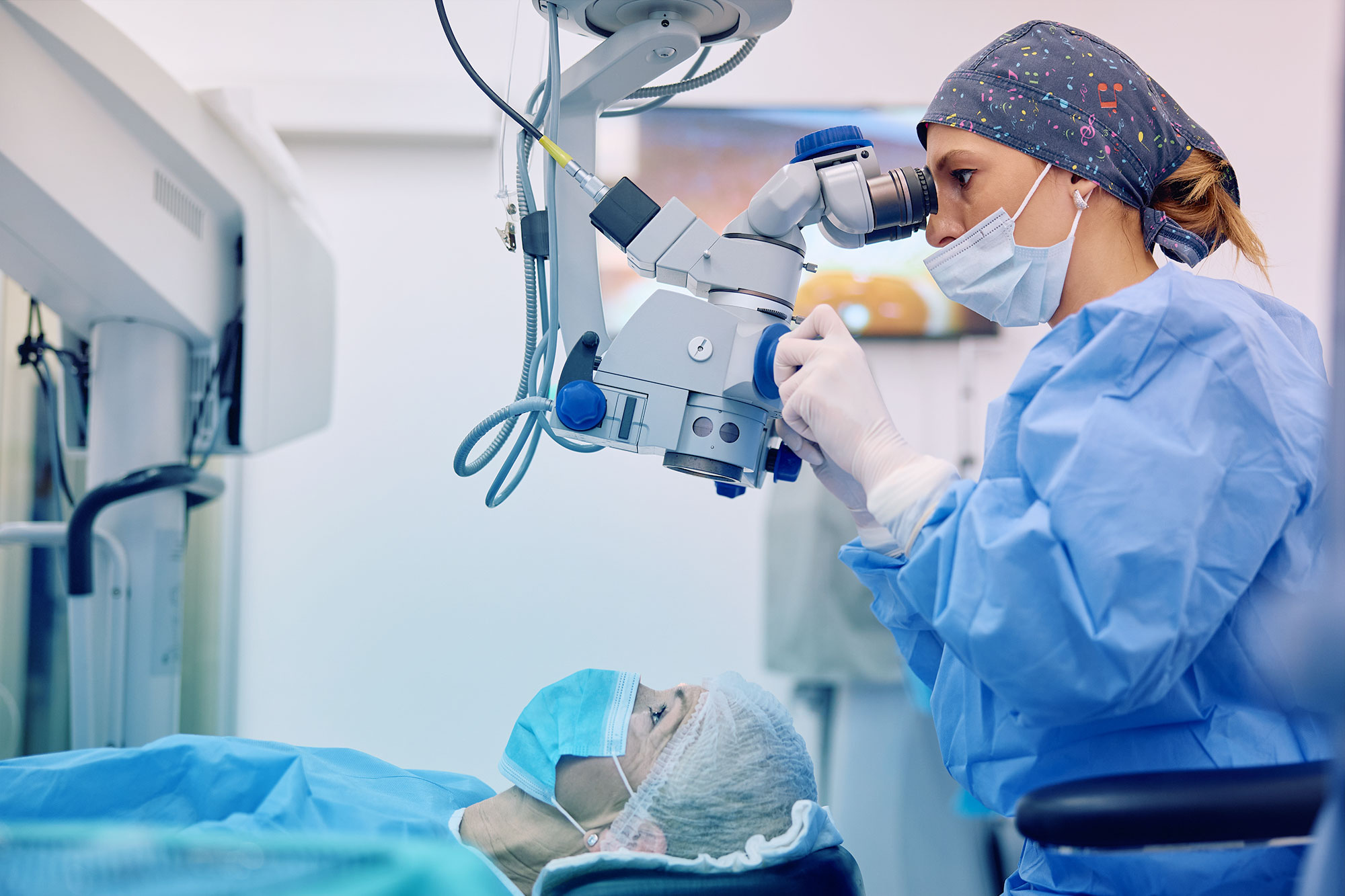
This article explains how strabismus surgery works, who may need it, recovery time, possible side effects and complications, adjustable suture techniques, factors affecting success, and what can influence strabismus surgery cost. It also explains when evaluation by an ophthalmologist or pediatric ophthalmologist may be appropriate.
Last Updated:13/10/2026
Strabismus surgery is an eye muscle surgery used to improve the alignment of misaligned eyes. It works by weakening, strengthening, or repositioning one or more eye muscles to help the eyes point in the same direction. The procedure may be performed in children or adults when eye misalignment cannot be adequately managed with non-surgical treatment or when surgery is considered the appropriate option.
The goal is not simply to make crossed eyes appear straighter. Depending on the condition, surgery may also help improve ocular alignment, double vision, abnormal head position, or how the eyes work together. The treatment plan depends on the cause of strabismus, eye measurements, vision in each eye, age, and previous treatment.
If your child has crossed eyes, a wandering eye, or another eye alignment problem, learn more about Magrabi Health’s Pediatric Ophthalmology service and the available assessment and care pathways.
Strabismus surgery is an eye muscle procedure used to improve the alignment of eyes that do not point in the same direction. It works by weakening, strengthening, or repositioning selected extraocular muscles that control eye movement. Strabismus itself occurs when one eye turns inward, outward, upward, or downward relative to the other eye.
The NHS explains that squint surgery involves moving the muscles that control eye movement so the eyes line up better. The operation may involve one or both eyes depending on the measurements and treatment plan.
Common surgical techniques include:
Technique | What Happens | Purpose |
Muscle recession | The muscle attachment is moved farther back on the eye | Reduces the pulling effect of the muscle |
Muscle resection | Part of the muscle is shortened before it is reattached | Strengthens its pulling effect |
Muscle plication | The muscle is folded to shorten it without removing a section | Strengthens muscle action in selected cases |
Adjustable sutures | The muscle position can be adjusted after the main operation | Allows additional eye muscle adjustment in selected patients |
The exact combination depends on the pattern of eye misalignment rather than simply whether the patient has a crossed eye or wandering eye.
People often use the term eye muscle imbalance when describing a squint eye, but strabismus is not always caused by a problem within the muscles themselves. The brain, nerves, vision development, refractive errors, and other medical conditions can also influence eye alignment.
Common squint eye causes may include:
Childhood strabismus that develops during visual development.
Significant farsightedness or another refractive error.
Amblyopia, where vision develops poorly in one eye.
Problems affecting the nerves that control eye movements.
Certain developmental or neurological conditions.
Previous eye trauma or surgery.
Thyroid eye disease in some adults.
Recurrence of childhood strabismus later in life.
The American Association for Pediatric Ophthalmology and Strabismus explains that treatment depends on the cause and may involve glasses, prism, amblyopia treatment, or eye muscle surgery. It also notes that adult strabismus may be associated with trauma, neurological conditions, vascular problems, or thyroid eye disease.
Refractive problems are particularly important in children because some eye turns may change after the correct glasses prescription is provided. You can read more about Refractive Errors.
No. squint eye correction does not always require surgery. Treatment may include glasses, amblyopia treatment, prism lenses, observation, or treatment of an underlying condition. Surgery may be considered when these approaches cannot provide the required eye alignment.
The treatment plan depends on the type of strabismus, its cause, the degree of misalignment, vision in each eye, and whether the patient has double vision or amblyopia.
Options may include:
Prescription glasses.
Treatment for amblyopia in children.
Prism lenses for selected cases of double vision.
Observation and regular measurements.
Treatment of an underlying medical condition.
Surgery when non-surgical measures cannot provide the required alignment.
A pediatric ophthalmologist may sometimes treat amblyopia before or alongside surgical planning. Straightening the eyes with surgery does not automatically restore vision that has been reduced by amblyopia.
Strabismus eye surgery is performed by weakening, strengthening, or repositioning selected extraocular muscles to improve eye alignment. The surgeon reaches these muscles through the thin tissue covering the eye, and the eye is not removed from its socket.
Before surgery, the ophthalmologist or strabismus specialist measures the direction and size of the eye turn. Eye movements, vision, binocular vision, glasses prescription, and previous treatments are also reviewed.
One or more muscles are then repositioned according to the surgical plan. A muscle recession may reduce the action of a muscle, while a muscle resection or plication may strengthen it.
Children usually undergo the procedure under general anaesthesia. The anaesthesia plan for adults depends on the operation, the patient's health, and the surgical team's assessment.
Surgery for crossed eyes and surgery for misaligned eyes may involve one eye, both eyes, or several muscles. The decision is based on eye measurements rather than simply which eye appears to turn.
Adjustable suture squint eye surgery is a technique that allows the surgeon to fine-tune the position of an eye muscle after the main operation. Instead of fixing the muscle permanently during surgery, an adjustable suture makes it possible to check eye alignment afterward and modify the muscle position if needed.
This technique may be considered when:
The final eye position is difficult to predict.
The patient has had previous squint eye surgery.
The eye misalignment is complex.
More precise postoperative eye muscle adjustment may be useful.
Adjustable suture strabismus surgery is more commonly used in cooperative adults and some older teenagers who can tolerate postoperative alignment testing and adjustment.
It is not necessary for every patient and is not automatically better than standard squint eye surgery. The ophthalmologist or strabismus specialist chooses the technique based on the type of eye misalignment, previous treatment, and the individual surgical plan.
Squint eye surgery in toddlers may be recommended for selected forms of childhood strabismus, but there is no single age that is correct for every child.
A pediatric ophthalmologist considers:
The type of pediatric strabismus.
Whether the eye turn is constant or intermittent.
The degree of eye misalignment.
Vision in each eye.
The presence of amblyopia.
Whether glasses change eye alignment.
The child's visual development.
Abnormal head position.
Previous treatment and follow-up measurements.
In some conditions, child strabismus surgery may be considered relatively early because eye alignment and visual development are closely connected during childhood.
Parents should therefore avoid deciding whether a child is “too young” for treatment based only on age. The diagnosis and the child's visual development are more important.
Squint eye surgery in adults can be performed for longstanding or newly developed misaligned eyes.
Adult strabismus may be related to a childhood eye turn that persisted or returned. It may also occur after nerve problems, trauma, thyroid eye disease, previous eye surgery, or other conditions affecting eye movement.
The goals of adult squint surgery may include:
Improving eye alignment.
Reducing double vision.
Improving abnormal head posture.
Improving control of eye movements.
Supporting binocular vision when possible.
Improving the functional and social effects of visible eye misalignment.
Adult treatment is therefore not necessarily cosmetic. Adjustable sutures may also be considered more often in adults because many adults can cooperate with postoperative measurements and adjustment.
Squint eye surgery in toddlers may be recommended for selected forms of childhood strabismus, but there is no single age that is correct for every child.
A pediatric ophthalmologist considers:
The type of pediatric strabismus.
Whether the eye turn is constant or intermittent.
The degree of eye misalignment.
Vision in each eye.
The presence of amblyopia.
Whether glasses change eye alignment.
The child's visual development.
Abnormal head position.
Previous treatment and follow-up measurements.
In some conditions, child strabismus surgery may be considered relatively early because eye alignment and visual development are closely connected during childhood.
Parents should therefore avoid deciding whether a child is “too young” for treatment based only on age. The diagnosis and the child's visual development are more important.
Squint eye surgery in adults can be performed for longstanding or newly developed misaligned eyes.
Adult strabismus may be related to a childhood eye turn that persisted or returned. It may also occur after nerve problems, trauma, thyroid eye disease, previous eye surgery, or other conditions affecting eye movement.
The goals of adult squint surgery may include:
Improving eye alignment.
Reducing double vision.
Improving abnormal head posture.
Improving control of eye movements.
Supporting binocular vision when possible.
Improving the functional and social effects of visible eye misalignment.
Adult treatment is therefore not necessarily cosmetic. Adjustable sutures may also be considered more often in adults because many adults can cooperate with postoperative measurements and adjustment.
If you are searching for “squint eye surgery Dubai,” the first step should be a complete ophthalmology assessment rather than choosing surgery based only on the appearance of the eye turn.
Important factors include:
Experience in strabismus and eye muscle surgery.
Pediatric expertise when the patient is a child.
Detailed preoperative eye alignment measurements.
Assessment for amblyopia and refractive errors.
Evaluation of double vision in adults.
Experience with previous or complex strabismus surgery.
Availability of postoperative follow-up.
Clear discussion of realistic alignment goals.
At Magrabi Health, Pediatric Ophthalmology includes assessment for squint, strabismus, lazy eye, vision problems, and other childhood eye conditions. The appropriate specialist and UAE branch can be selected according to the patient's age, condition, and appointment availability.
Not sure which specialist or UAE branch is appropriate for a squint or eye alignment problem? Contact Magrabi Health on WhatsApp and ask about the suitable Pediatric Ophthalmology or strabismus care pathway.
Squint eye surgery recovery begins immediately after the operation. The eye may initially look red and feel sore, gritty, watery, or uncomfortable.
Temporary blurred vision or double vision can also occur while the eye muscles and visual system adapt to the new eye position.
The NHS notes that soreness commonly lasts for a few days, while complete recovery from squint surgery may take several weeks. The timing for returning to work, school, exercise, swimming, or other activities should follow the surgeon's individual instructions.
The exact strabismus surgery recovery time varies according to:
The number of muscles treated.
Whether one or both eyes were operated on.
Previous eye muscle surgery.
The patient's age.
The surgical technique.
Healing response.
Whether adjustable sutures were used.
Redness may remain visible longer than the initial discomfort, so the eye can still look red even when the patient feels much better.
Some temporary symptoms are expected after eye alignment surgery and do not necessarily indicate a complication.
Common squint eye surgery side effects may include:
Redness.
Mild eyelid swelling.
Soreness or a gritty sensation.
Watery eyes.
Temporary blurred vision.
Temporary double vision.
Discomfort when moving the eyes.
Strabismus surgery complications are less common but should be discussed before the procedure.
Possible complications include:
Possible Complication | What It Means |
Residual misalignment | The eyes may remain partly misaligned |
Overcorrection or undercorrection | The eye position may shift more or less than intended |
Persistent double vision | Double vision may continue after healing |
Infection | Infection can develop around the operated tissues |
Bleeding or significant inflammation | May require additional assessment |
Muscle displacement | A treated muscle may move from the intended position |
Need for further surgery | Some patients require another operation |
Anaesthesia-related complications | Risks depend on health and type of anaesthesia |
Serious eye injury or vision loss | Rare but important surgical risks |
Contact the treating team promptly if there is severe or increasing pain, a sudden decrease in vision, unusual discharge, worsening swelling, marked redness that is increasing rather than improving, or another symptom that concerns you after surgery.
There is no single squint eye surgery success rate that applies to every patient.
“Success” can mean different things. For one patient, it may mean straighter eye alignment. For another, it may mean reducing double vision, improving abnormal head position, improving binocular vision, or reducing how frequently an eye turns.
Results can be influenced by:
Type of strabismus.
Size and direction of the eye turn.
Age.
Vision in each eye.
Presence of amblyopia.
Neurological or medical causes.
Previous eye muscle surgery.
Number of muscles treated.
Healing and changes in eye position over time.
Some patients achieve the desired alignment after one procedure, while others may need continued observation, glasses, prism, amblyopia treatment, or additional surgery.
A realistic surgical goal should therefore be discussed with the ophthalmologist before the procedure rather than relying on a general percentage found online.
There is no single squint eye operation cost that applies to every patient.
Likewise, squint eye surgery cost depends on the individual surgical plan rather than the diagnosis name alone.
Factors that can affect the final cost include:
Specialist consultation and preoperative measurements.
Complexity of the eye misalignment.
Number of muscles requiring treatment.
Whether one or both eyes require surgery.
Type of anaesthesia.
Previous strabismus operations or scar tissue.
Use of adjustable sutures when appropriate.
Hospital or surgical facility fees.
Postoperative examinations.
Insurance coverage and policy conditions.
Patients considering strabismus surgery Dubai or elsewhere in the UAE should request a personalised estimate after the ophthalmologist has completed the necessary measurements and determined the treatment plan.
You should see an ophthalmologist when eye misalignment is persistent, worsening, or associated with vision problems. A specialist examination can help identify the cause and determine whether treatment is needed.
Children should be assessed if they have:
Persistent crossed eyes or a recurring eye turn.
An eye turn that is becoming more frequent.
Abnormal head posture or head tilting.
Suspected amblyopia.
Difficulty using both eyes together.
Adults should seek assessment for a new eye alignment problem, especially if it:
Develops suddenly.
Causes new double vision.
Becomes progressively worse.
Affects normal eye movement or daily visual function.
The examination helps determine whether the problem is related to childhood strabismus, adult strabismus, a refractive error, an eye movement disorder, or another underlying cause.
If you or your child needs assessment for persistent eye misalignment, You can book an appointment with Magrabi Health through a phone call or use the booking form for an ophthalmology evaluation and an individual treatment plan.
Strabismus surgery can improve the position of misaligned eyes by changing the action of selected eye muscles. The procedure may be considered in childhood or adulthood, but timing, technique, recovery, and expected results differ between patients. A detailed assessment by an ophthalmologist or strabismus specialist is essential to identify the cause of the eye turn, evaluate vision and alignment, and determine whether surgery or another treatment is appropriate.
Medically reviewed by Magrabi Health Specialized Doctors.
Medical Disclaimer: The information in this article is for health education purposes only and does not replace a visit to a doctor or consultation with a qualified specialist. Magrabi Health doctors recommend seeking medical evaluation for an accurate diagnosis and appropriate treatment plan.
NHS – Squint: Surgery.
American Association for Pediatric Ophthalmology and Strabismus – Strabismus.
Dubai Health Authority – Ophthalmology (Adult/Paediatric) Services