Last Update: 19/11/2026
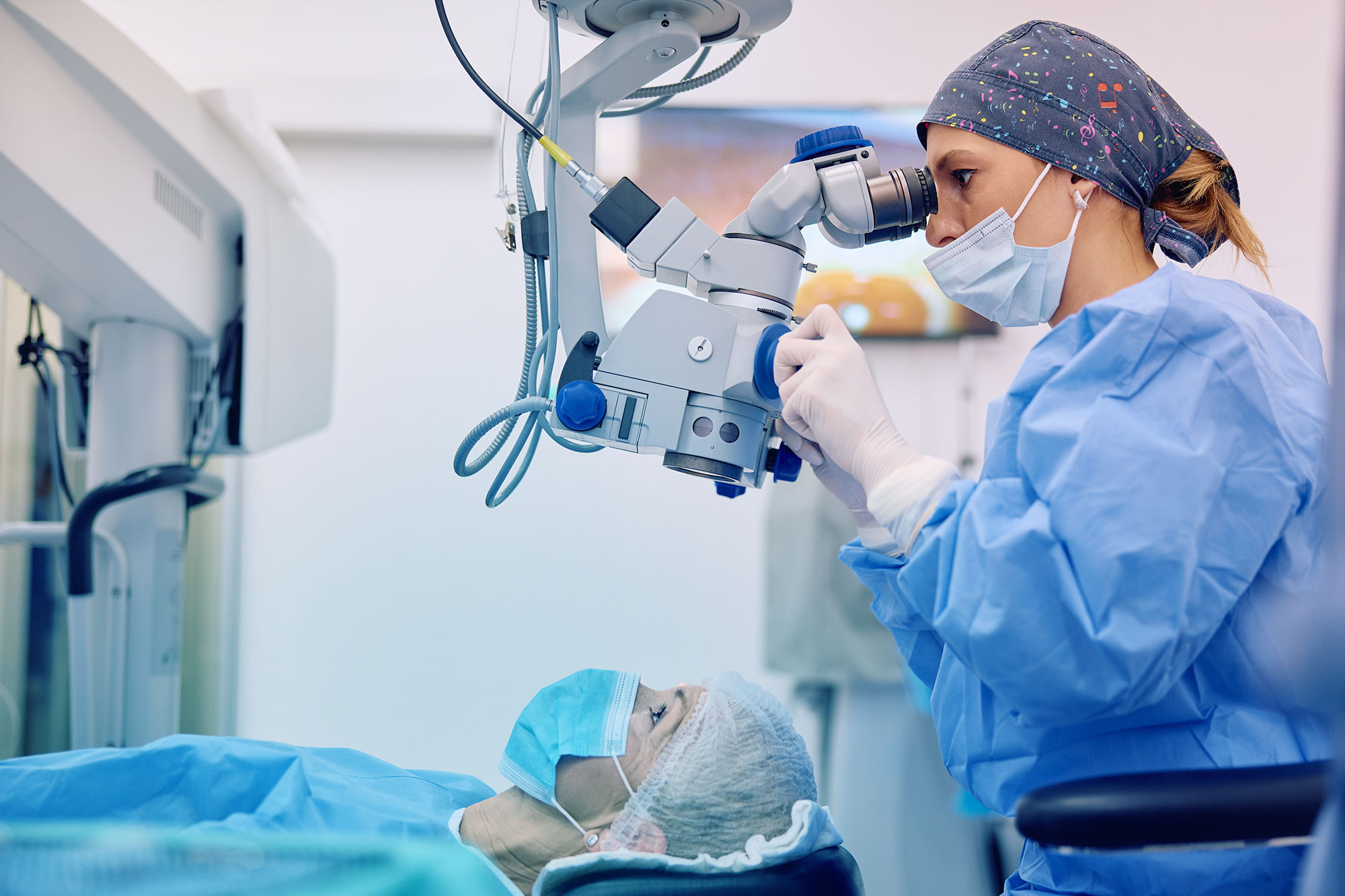
Upper blepharoplasty, also called upper eyelid surgery, is an oculoplasty procedure that removes or repositions excess skin, and sometimes muscle and fat pads, from the upper eyelids. At Magrabi Health in the UAE, it is part of Oculoplasty and cosmetology care. It is performed to lift hooded eyelids that block the upper field of vision or to correct a heavy, tired look. The procedure is usually done under local anesthesia, with or without sedation, and bruising and swelling typically settle within about two weeks.
Candidates are usually adults with dermatochalasis, which means loose or excess eyelid skin. A specialist assessment checks the eyelids, brow position, and tear film first, because an upper eyelid lift is not right for everyone. Magrabi Health's oculoplasty team can help you decide whether surgery or another option fits your goals.
Wondering whether heavy eyelids need surgery? Learn how oculoplasty and cosmetology care works at Magrabi Health. Explore Oculoplasty and Cosmetology at Magrabi Health
Upper lid blepharoplasty is the surgical repair or reshaping of the upper eyelid. It can address excess eyelid skin, the muscle beneath it, prominent fat pads, and sometimes an underlying droop. A StatPearls clinical review of upper eyelid blepharoplasty notes that it may be performed for cosmetic or reconstructive reasons, often both.
Upper lid blepharoplasty and upper eyelid blepharoplasty are the same procedure under two names. Patients also search for it as an eyelid tuck, an upper lid lift, hooded eyelid surgery, or upper eyelid correction. Droopy eyelid surgery can mean blepharoplasty, ptosis repair, or both, so the surgeon should confirm which one is planned.
Most cases involve dermatochalasis, the loosening of eyelid skin and muscle. It results from lost elasticity with age, and genetics play a strong role. Prominent fat pads often appear alongside it, usually from around the age of 30, and sometimes earlier.
Hooded eyelids and droopy eyelids look similar, but they have different causes and need different treatment. Telling them apart is the first step in planning upper eyelid surgery. The table below compares the two.
Factor | Hooded eyelids | Droopy eyelids (ptosis) |
|---|---|---|
What it is | A fold of skin hangs over the eyelid crease and hides part of the lid. | The edge of the lid itself sits too low. |
Where the problem is | The skin above the lid edge | The position of the lid edge |
What contributes | Often a mix of lateral dermatochalasis and brow ptosis, which is a low or descended eyebrow. | A lid edge that sits too low, often because the levator muscle is weak. |
Can they occur together? | Yes | Yes |
The two conditions can occur together, which is why an examination of the eyelids and brows comes before any surgical plan.
Candidacy depends on why surgery is needed and on the health of the eye surface. Surgeons separate functional blepharoplasty from cosmetic blepharoplasty because the goals and the paperwork differ.
Functional blepharoplasty | Cosmetic blepharoplasty | |
|---|---|---|
Main goal | Clear a blocked upper field of vision and reduce eyelid heaviness | Refine the look of the eyelid crease and upper eyelid fullness |
Typical findings | Excess eyelid skin resting on the lashes, outer hooding, raising the brows or chin to see | Excess skin or prominent fat pads, a heavy or tired look |
Common complaints | Trouble driving or reading, brow-related headaches, skin irritation in the fold | A less defined crease or puffy upper lids |
Insurance | May depend on whether the surgery treats a vision problem | Surgery for appearance alone probably will not be covered |
The insurance row follows Mayo Clinic's blepharoplasty guidance. UAE insurers set their own rules, so check your policy before booking.
Visual field obstruction means the eyelid skin blocks part of the upper or upper-outer view. Some people tilt the chin back or lift the brows all day to see clearly. Over time, this can cause forehead tension or headaches.
A visual field test measures how much of your vision is affected. StatPearls notes that formal testing is used in some cases only, because it rarely changes the surgical plan.
Certain conditions raise the risk of complications. The surgeon reviews them before recommending upper eylied blepharoplasty:
Dry eye, because even a small increase in corneal exposure can worsen dryness.
Thyroid disease with bulging eyes.
Clotting disorders or blood-thinning medicines, which need review with your physician.
Light sensitivity.
Previous eyelid surgery, which can limit the available skin.
Smoking, which slows tissue healing.
The upper lid blepharoplasty technique follows a set sequence that the surgeon adapts to each eyelid. The plan depends on how much skin is excess, whether the fat pads are prominent, and where the eyebrow sits.
The surgeon reviews your medical and eye history, including medicines and supplements. The examination covers the eyelids and brows, the blink and eyelid closure, the levator muscle function, and the tear film. Photographs of your younger face can help set a natural eyelid crease height.
Upper lid blepharoplasty follows six steps, from marking the eyelid crease to closing the incision. The order is the same for most patients, but the surgeon adjusts each step to your eyelid anatomy. The table below shows what happens at each stage.
Step | What the surgeon does |
|---|---|
1. Marking | Marks the natural crease incision, or a planned new crease, with you sitting upright so the brow position is considered. More skin is usually removed toward the outer corner. |
2. Anesthesia | Inject local anesthetic into the eyelid. Sedation may be added for comfort. |
3. Incision | Cuts along the marked line with a blade, electrocautery, a CO2 laser, or a radiofrequency needle. |
4. Skin and muscle | Removes the excess eyelid skin and, when needed, a small strip of the muscle under it. The muscle that closes the lid near the lash line is preserved. |
5. Fat pads | Open the thin membrane over the fat pads. Fat is removed, or moved to fill hollow areas, only if needed. |
6. Closure | Closes the incision with fine sutures. The eyelid crease can be defined by anchoring the closure to the tissue of the levator muscle. |
The final crease often ends up about 2 mm higher than the marking. Surgeons plan for this because lowering a crease that is too high is difficult.
Over-removing the central fat pad can leave a hollow upper eyelid with an unnatural look. For this reason, a conservative upper blepharoplasty technique that keeps or repositions fat has become more popular.
The surgeon decides how much to remove, how much to keep, and how much to move. That judgment depends on your age, eyelid anatomy, and brow position.
Yes. Blepharoplasty ptosis surgery is combined when the eyelid edge itself sits too low. Mayo Clinic explains that when an upper eyelid droops close to the pupil, the surgeon may combine blepharoplasty with a ptosis procedure that lifts the lid as well as removes excess skin.
Two measurements guide the decision. The first is the distance from the pupil's light reflex to the lid edge, which is normally 3.5 to 4 mm. The second is the strength of the levator muscle, which lifts the eyelid and should normally measure more than 12 mm.
Skin removal alone cannot lift a lid that droops because the levator muscle is weak. You can read more about what causes a drooping eyelid and how it differs from excess skin.
It can. After upper eyelid surgery, the brow may sit lower, which unmasks brow ptosis that was hidden by the extra eyelid skin. This is more common in men.
For this reason, the surgeon examines the brow before surgery. When the brow is low, cosmetic upper blepharoplasty is often planned together with a brow lift.
Not sure whether upper eyelid surgery suits your eyelids? Message Magrabi Health on WhatsApp Our team can help you find the right consultation.
Upper eyelid blepharoplasty before and after photos usually show a more visible eyelid crease, less skin resting on the lashes, and a cleaner line between the lid and the brow. When surgery was done for functional reasons, the eyes often look more open. Photos cannot show the change in how the eyes feel or how well you see.
A brow lift is a separate procedure. Upper eyelid surgery does not reshape the face, and it cannot raise a low brow on its own.
Photos are useful only when they are comparable. Look for these points:
Same lighting, camera angle, and facial expression in both photos.
The time since surgery, because swelling and numbness fade over weeks.
A starting point similar to yours, such as the same degree of hooding and brow position.
Whether the case also included ptosis repair or a brow lift.
Small differences between the two sides, which are common after eyelid surgery.
Surgeons usually wait until swelling has settled before judging any adjustment. StatPearls notes that adjustments are rarely made before two months.
A first consultation reviews your goals, your eye health, and what surgery can realistically change. These are the questions worth asking at a first consultation, with short answers:
Question | Short answer |
Will surgery improve my vision or only my appearance? | It can improve vision when excess eyelid skin blocks the upper field of view. A visual field test may show how much is blocked. |
Do I also need ptosis repair or a brow lift? | The surgeon examines the lid edge, the levator muscle, and the brow position to decide. |
Where will the scar be? | Along the eyelid crease, where the natural fold hides most of it. Scars take months to fade. |
How long is recovery? | Bruising and swelling usually ease over about 10 to 14 days. Lid edge numbness can last 6 to 8 weeks. |
Will my dry eyes get worse? | Dry eye is assessed before surgery, because it can worsen after it. Temporary dryness is common during healing. |
Is it covered by insurance? | It may depend on whether the surgery treats a vision problem. Check your policy. |
Upper lid blepharoplasty recovery follows a predictable pattern, although the pace differs from person to person. Mayo Clinic says bruising and swelling lessen over about 10 to 14 days, and scars can take months to fade. Follow your own surgeon's written instructions, which take priority over any general timeline.
Many patients search for upper eyelid blepharoplasty recovery photos day by day to know what is normal. Photos from different people vary widely, because bruising depends on skin type, medicines, and the surgical plan. The timeline below describes the typical stages in words.
Day | What is typical | Common care |
|---|---|---|
Day 1 | Swelling and tight eyelids begin. Discomfort is usually mild. | Cold compresses on and off during the first 24 hours. Rest with the head raised. |
Days 2 to 3 | Bruising and swelling are noticeable. The eyes may feel dry and may have water. The lids may not close fully at first, which usually settles within a few days. | Lubricating drops or ointment as prescribed. Sleep with the head raised for the first two nights. |
Day 7 | Swelling and bruising are fading. Non-absorbable stitches, if used, are often removed around this visit. | Follow-up visit with your surgeon. |
Day 14 | Bruising and swelling have mostly settled, although this can take up to 2 weeks. | Continue lubrication if the eyes feel dry. Protect the skin from the sun. |
Weeks 6 to 8 | The lid edge can feel numb or different. Most people recover feeling by about 8 weeks, although some numbness can last longer. | Review of the result once swelling has fully settled. |
Months 2 and beyond | Scars keep fading over months. Adjustments, if needed, are rarely made before 2 months. | Ongoing sun protection of the eyelid skin. |
The cold compress and head-raised advice follows the post-operative care described in StatPearls. The exact timing of stitch removal and return to normal activity depends on your surgeon.
The incision is placed along the eyelid crease, so the natural fold hides most of the scar. Scars from the surgical cuts take months to fade, according to Mayo Clinic. Protecting the delicate eyelid skin from the sun helps the healing.
The scar is one reason crease placement is planned before surgery. A crease marked too high or uneven is difficult to correct afterward.
All surgery carries risk. Mayo Clinic lists infection, bleeding, dry or irritated eyes, difficulty closing the eyes, noticeable scarring, skin discoloration, and injury to the eye muscles. Temporarily blurred vision is possible, loss of eyesight is rare, and some people need follow-up surgery.
Most of these risks are uncommon. The effects below are more common, and they are usually temporary.
Effect | What to expect |
Dry or irritated eyes | Blinking and lid closure are affected in the first weeks, so the eyes can feel dry. Lubricating drops are used during the day, and an ointment at night in some cases. Existing dry eyes make this worse. |
Difficulty closing the eyes | Almost every patient has some degree of this early on. It usually settles within a few days, and lubricants protect the eyes until it does. |
Watering | Tearing can occur for a few days because the surface of the eye is relatively dry. |
Reduced lid sensation | The lid edge can feel numb for 6 to 8 weeks. Most people recover by 8 weeks, although some numbness can last longer. |
Uneven creases or lid height | A small difference between the two sides is common. It is usually judged after swelling settles, and adjustments are rarely made before two months. |
StatPearls also notes that the final crease often ends up about 2 mm higher than planned, and that lowering a crease that is too high is difficult. This is why crease height is planned carefully before surgery.
Bleeding behind the eye is the most serious early complication. It causes severe pain, a bulging eye, nausea, and reduced vision, and it needs emergency treatment. See the urgent warning signs above.
Surgeons lower the risk by planning carefully before surgery:
Assessing the eyes first. Dry eye, eyelid closure, and the tear film are checked, because severe dry eye is a reason to avoid or delay surgery.
Reviewing health and medicines. Blood-thinning medicines, clotting disorders, and thyroid disease are reviewed with your physician.
Stopping smoking. Smoking slows tissue healing.
Removing tissue conservatively. Keeping or repositioning fat, rather than removing it, helps avoid a hollow or unnatural look.
Contact your surgeon or go to an emergency department right away if you have any of the following:
Severe or worsening eye pain.
Reduced vision or sudden vision changes.
A bulging eye with nausea or vomiting.
Heavy bleeding.
Chest pain, shortness of breath, or an unusual heart rate.
Blepharoplasty generally causes little discomfort. StatPearls states that severe pain afterward should be treated as possible bleeding behind the eye until proven otherwise, because this is an emergency.
East Asian blepharoplasty, also called Asian blepharoplasty, is an upper eyelid procedure that creates or refines the eyelid crease while respecting the anatomy of the eyelid. People often search for it as double eyelid surgery when forming a crease is the main goal.
Eyelid anatomy varies between individuals and populations. According to StatPearls, the crease in many Asian eyelids sits very low, at about 1 to 3 mm, because the orbital septum inserts lower and the attachments to the skin are weaker. Crease height is therefore planned for each patient, rather than copied from a standard design.
Upper eyelid blepharoplasty cost depends on the surgical plan, the type of anesthesia, the facility, and follow-up care. A fixed figure cannot be given without an examination, because skin-only surgery and surgery with fat repositioning or ptosis repair are different operations.
The main factors are:
The scope of surgery: skin only, skin and muscle, fat pad work, or ptosis repair.
Whether other procedures, such as a brow lift or lower eyelid surgery, are combined.
The reason for surgery is because insurers may treat functional cases differently from cosmetic ones.
The anesthesia plan, pre-operative assessment, and follow-up visits.
For a personal estimate, ask Magrabi Health after your consultation, when the plan is confirmed.
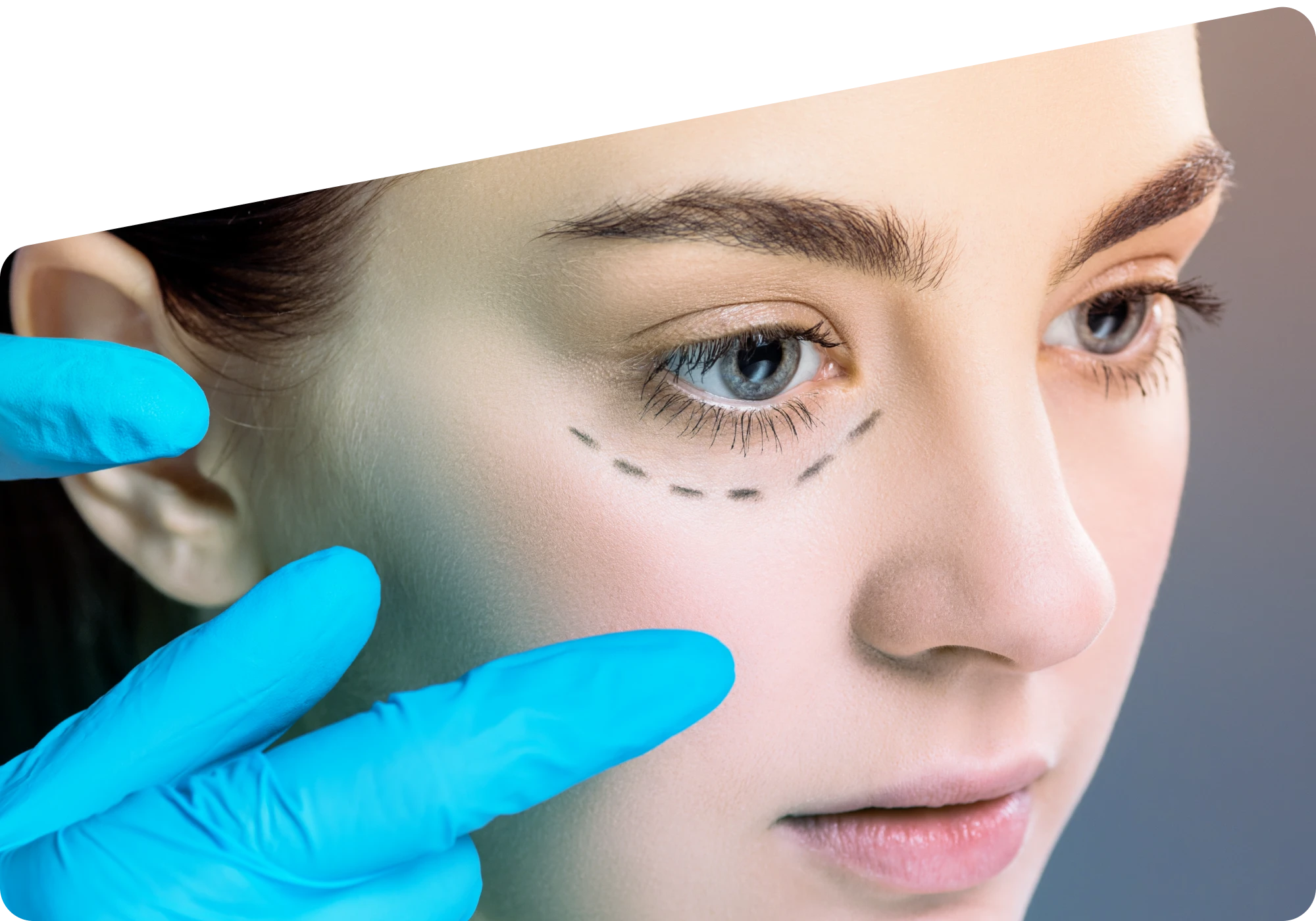
Sometimes, but not always. Whether the upper and lower eyelids are treated together depends on your concerns, your health, and the surgeon’s plan, because combining procedures in one setting can add to the risk of complications. In some cases the surgeon may recommend treating them in separate stages. If under-eye bags also bother you, read our guide to lower blepharoplasty to compare the two procedures.
If heavy upper eyelids are affecting your vision or your appearance, an oculoplasty consultation can clarify your options. You can book a consultation with Magrabi Health through a phone call or use the booking form.
Upper blepharoplasty removes or repositions excess eyelid skin, and sometimes fat pads or muscle, to lift hooded eyelids and refresh the upper lid. It may be functional, cosmetic, or both, and it can be combined with ptosis repair or a brow lift. Bruising and swelling can last up to about two weeks, and results are long-lasting but not permanent for everyone. An assessment with an oculoplastic surgeon at Magrabi Health can confirm whether surgery suits you.
Medically reviewed by specialist doctors at Magrabi Health.
Medical Disclaimer: The information in this article is for health education purposes only and does not replace a visit to a doctor or consultation with a qualified specialist. Magrabi Health doctors recommend seeking medical evaluation for an accurate diagnosis and appropriate treatment plan.
Lower Blepharoplasty: Techniques, Recovery and What to Expect