Refractive surgery side effects are common during healing, but not all symptoms are equal. Knowing what is expected, what needs monitoring, and what requires urgent care protects both vision quality and long-term eye health.
Last updated: 14/01/2026
Refractive surgery procedures such as LASIK, PRK, and SMILE aim to reduce dependence on glasses or contact lenses by reshaping the cornea.
While outcomes are generally safe and predictable when patients are properly selected, side effects and temporary visual symptoms are part of the healing process, not a sign of failure.
In the UAE, recovery can feel more challenging due to air-conditioning, prolonged screen use, dry environments, and frequent night driving.
This guide explains refractive surgery side effects in detail—what is normal, what is not, how long symptoms usually last, and exactly when you should call your doctor.
If you’re unsure whether your recovery symptoms are normal, Book a consultation with an eye specialist at Magrabi Health Hospitals in the UAE.
Refractive surgery side effects occur because the cornea is a living tissue that needs time to heal after being reshaped. During this period, nerve signals, tear production, and surface smoothness may be temporarily altered.
Most side effects are functional and reversible, meaning they improve as healing progresses.
The key is distinguishing expected healing-related symptoms from true refractive surgery complications.
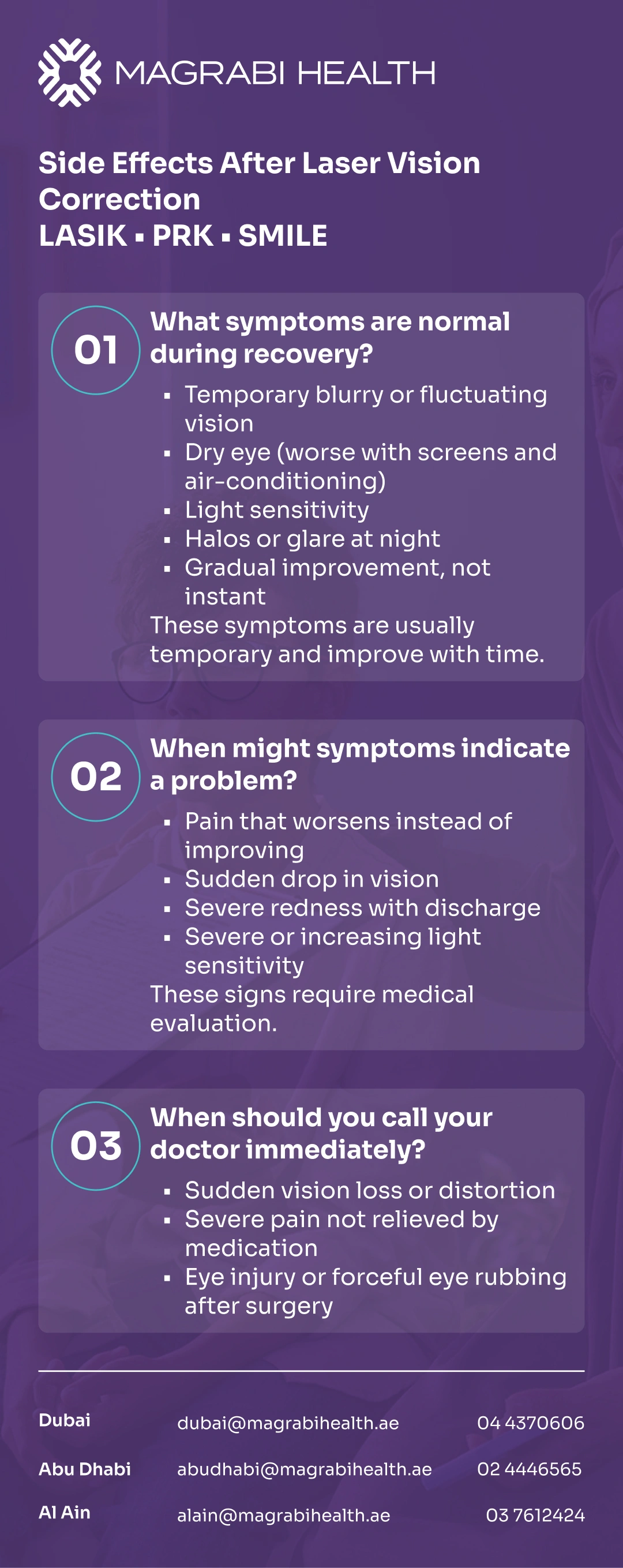
Normal recovery symptoms vary by time and procedure, but several effects are commonly expected.
In the first days to weeks, patients may notice:
Fluctuating clarity, especially between blinks.
Mild discomfort or foreign body sensation.
Light sensitivity.
Dryness that worsens with screens or air-conditioning.
In the first weeks to months, it is still normal to experience:
Vision that is sharper some days than others.
Halos or glare during night driving.
Temporary difficulty with contrast in low light.
These symptoms usually improve gradually, not overnight.
Different refractive surgery procedures affect the cornea in distinct ways, which means the type, intensity, and duration of side effects can vary depending on the technique used.
LASIK side effects are often related to temporary nerve disruption from the corneal flap. Common effects include:
Dry eye after LASIK.
Fluctuating vision, especially late in the day.
Halos and glare at night.
For most patients, these improve significantly within 3–6 months, though mild dryness may persist longer in some.
PRK side effects are more surface-related because no flap is created. Patients often experience:
More noticeable discomfort in the first week.
Slower visual recovery.
Temporary haze or glare during healing.
Despite a slower start, long-term visual quality after PRK is usually excellent once healing stabilises.
SMILE side effects are often milder early on, but patients may still notice:
Temporary blur or ghosting.
Night glare during the first months.
Mild dryness.
Vision usually stabilises progressively rather than instantly.
Dry eye after LASIK is one of the most frequently reported refractive surgery side effects. It happens because corneal nerves—which help regulate tear production—need time to recover.
Symptoms may include:
Burning or stinging.
Vision that clears after blinking.
Discomfort that worsens with screens or driving.
In most cases, dry eye improves within weeks to months. Persistent dryness may require targeted treatment, especially in patients who had borderline dry eye before surgery.
For more details on assessment and management, patients can visit the refractive and cornea care service page on the Magrabi Health website.
Halos and glare after LASIK are often linked to:
Tear film instability.
Healing-related corneal irregularities.
Pupil size in low light.
These symptoms are usually most noticeable during night driving. In the majority of cases, they gradually diminish as the cornea smooths and dryness improves.
Persistent or worsening halos are not ignored—they are evaluated with refraction and corneal imaging to identify treatable causes.
One of the most common patient fears is whether side effects last forever.
For most patients:
Dry eye improves significantly.
Night vision symptoms lessen.
Vision stabilises.
Permanent side effects are uncommon when surgery is properly indicated and followed by appropriate care. Ongoing symptoms usually reflect treatable surface or optical issues, not irreversible damage.
Not all symptoms are part of normal healing. Certain patterns raise concern for refractive surgery complications.
Warning signs include:
Pain that increases instead of improving.
Sudden drop in vision after initial recovery.
Persistent redness with discharge.
Severe or worsening light sensitivity.
These signs require prompt medical review.
When recovery is not progressing as expected, specialists assess:
Corneal surface healing.
Flap or interface integrity (in LASIK).
Tear film stability.
Eye pressure
Corneal shape using advanced imaging
Early intervention often prevents long-term impact on vision quality.
You should contact your eye doctor without delay if you experience:
Sudden vision loss or distortion
Significant pain not controlled with medication
Increasing redness or discharge
Eye injury or rubbing trauma after surgery
Timely evaluation is critical to prevent complications from progressing.
You can also visit the Refractive and Cornea Care service page on the Magrabi Health Hospitals website to learn what a post-surgery follow-up typically includes and how dryness, halos, and glare are assessed during recovery.
Long-term outcomes after refractive surgery are generally stable. Some patients may continue to notice:
Mild dryness
Occasional night glare in demanding conditions
Regular follow-up ensures ongoing eye health and visual comfort.
Refractive surgery side effects are usually part of healing, not a sign of failure. Understanding what is normal—and knowing when to seek care—helps ensure a safe recovery and realistic expectations.
If you’re recovering from refractive surgery or have concerns about ongoing side effects, book a consultation at Magrabi Health Hospitals in the UAE to review your eye health, clarify what’s normal, and discuss appropriate next steps for your recovery.
This article is for educational purposes only and does not replace personalised medical advice. Recovery varies between individuals.
Reviewed by Dr. Moataz Sallam, Consultant Cataract, Refractive and Anterior Segment Surgeries, with 20+ years of experience in phaco-refractive and cornea care in Dubai and Al Ain.