Considering cataract treatment in Al Ain? Learn the 6 essential facts about symptoms, safety, technology, IOL choices, and costs — and understand why many patients trust Magrabi Hospitals for expert, reassuring cataract care.
Last updated: 9/12/2025
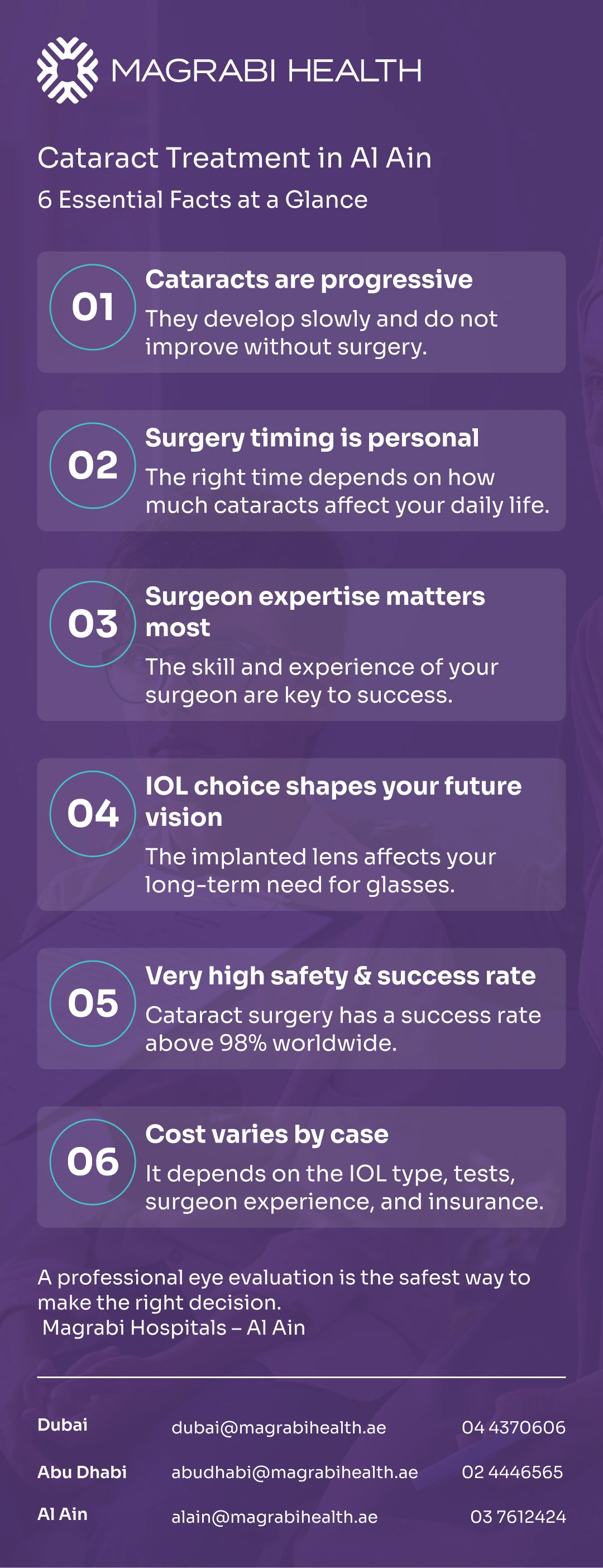
Cataracts don’t appear suddenly—they slowly affect how clearly you see. Many people in Al Ain first notice duller colours, difficulty driving at night, or faster eye fatigue. These gradual changes make it easy to delay getting checked.
But cataracts continue to progress, and no treatment can reverse them. The reassuring part is that modern cataract surgery is highly safe when done by experienced specialists, and Al Ain offers reputable centres with advanced technology, supported by Magrabi’s long regional expertise.
This article is designed as a calm, clear guide—not to push you into surgery, but to help you understand your options so you can make a decision that truly fits your eyes, your life, and your comfort.
Start with a professional cataract evaluation — book your assessment at Magrabi Hospital Al Ain today
Cataracts progress gradually as the eye’s natural lens becomes cloudy due to age, diabetes, previous eye surgery, steroid use, or genetic factors. This slow change often goes unnoticed for years until symptoms of cataracts begin to interfere with daily tasks.
Common symptoms include blurred vision, difficulty reading in low light, glare or halos when driving at night, faded colours, and frequent changes in glasses without real improvement.
Many patients in Al Ain adapt for a while—avoiding night driving or using stronger lighting—but these are temporary solutions. Once cataracts start affecting daily life, it’s a sign that the eye needs proper evaluation.
Two essential points:
Cataracts do not reverse on their own, and no drops or supplements have been proven to clear them.
Waiting too long can make surgery more challenging, as the lens becomes harder and more mature.
The right time for surgery is when your cataract impacts your quality of life and your specialist advises that treatment now is safer than waiting. A tailored evaluation in Al Ain helps determine the best next step.
To better understand the timing of surgery, you can also read our article about the appropriate age for cataract surgery.
Modern cataract surgery is fast, precise, and typically performed as a day procedure. Techniques and instruments have evolved for decades, but even with advanced technology, the most important factor is still your surgeon’s expertise.
A skilled cataract surgeon in Al Ain will:
Carefully assess your eye health (cornea, retina, optic nerve) before recommending surgery.
Identify risk factors early, such as weak zonules, small pupils, previous eye trauma, or other eye conditions.
Choose the most suitable technique and intraocular lens (IOL) for your case.
Explain realistic expectations for your post-surgery vision based on your eye measurements and lifestyle.
It’s natural to feel nervous and wonder, “Who is the best cataract doctor?” In reality, the best surgeon is someone who is:
Experienced in cataract and refractive surgery.
Clear and transparent in communication.
Willing to discuss options, risks, and benefits in simple language.
Supported by a specialised team and a properly equipped facility.
Magrabi’s cataract surgeons in Al Ain are part of a regional network known for advanced refractive and cataract care, combining high surgical volumes with a strong focus on safety, precision, and patient education.
If you’re unsure where to begin, reviewing Al Ain cataract doctors’ profiles and booking a consultation is often a reassuring first step.
Many people assume they must travel outside Al Ain for advanced eye care, but the city now offers diagnostic and surgical technologies that match leading regional standards.
For patients who want to compare technologies across the UAE, you can also explore Technology Used in Top Eye Hospitals in Dubai, as the same high-level systems are commonly available in Al Ain as well.
Common technologies used before and during cataract surgery include:
Optical Coherence Tomography (OCT): Detailed imaging of the retina and macula to detect any issues that could affect visual outcomes.
Corneal Topography: A precise map of the cornea, essential for planning surgery in patients with astigmatism or irregular corneas.
Biometry and IOL Calculations (e.g., IOL Master): Highly accurate measurements used to determine the correct lens power for implantation.
Advanced microscopes and phacoemulsification systems: Allow safe, efficient removal of the cloudy lens with minimal incisions.
Some centres in Al Ain also offer laser-assisted cataract surgery, which can support specific steps such as corneal incisions or lens fragmentation.
Reputable eye centres follow strict sterilisation and calibration protocols, including:
Single-use items where appropriate.
Controlled operating-room environments.
Regular maintenance and validation of surgical equipment.
Choosing cataract surgery in Al Ain means staying close to home without compromising on modern technology or high standards of care.
Cataract surgery is not only about removing the cloudy lens—it’s also about selecting the artificial lens that replaces it. The implanted intraocular lens (IOL) plays a major role in how you see long after surgery.
Main IOL options include:
Monofocal IOLs: Provide clear vision at one main distance—usually far. Reading or computer glasses may still be needed.
Multifocal or EDOF IOLs: Designed to reduce dependence on glasses by covering multiple distances. Not suitable for everyone, especially patients with certain corneal or retinal conditions.
Toric IOLs: Ideal for patients with significant astigmatism, improving clarity without distance glasses.
There is no single “best” lens for everyone. The right choice depends on your eye measurements, glasses prescription, lifestyle, and personal expectations. For example:
Night drivers may prefer lenses with fewer halos.
Frequent readers or computer users may prioritise near or intermediate vision.
Patients satisfied with using reading glasses may benefit most from a monofocal IOL.
A personalised IOL consultation in Al Ain—where your surgeon explains each option’s benefits, limitations, and costs—is essential to choosing the lens that fits your visual goals.
Cataract surgery is one of the most common and successful eye procedures worldwide, with success rates exceeding 98%. When performed by an experienced surgeon in a well-equipped centre, it is typically:
Short: around 10–20 minutes per eye.
Comfortable: performed under local anaesthesia with numbing drops or a small injection.
Predictable: most patients notice clearer vision within days, with full stabilisation in a few weeks.
Normal temporary post-operative symptoms may include:
Mild discomfort or scratchiness.
Slight redness.
Light sensitivity.
Short-term vision fluctuations.
Occasional halos or glare as the eye adapts.
Serious complications—such as infection or retinal detachment—are rare. Choosing an experienced surgeon, following instructions, and attending follow-up visits all help keep risks low.
At Magrabi Al Ain, cataract surgery follows international standards and strict safety protocols supported by advanced technology. You can review quality recognitions and accreditations on the Magrabi Accreditations page for additional reassurance.
One of the most common questions patients ask is, “How much does cataract surgery cost in Al Ain?”
The truth is that pricing varies, and any single number online is usually incomplete.
It depends on several factors that affect the cost of cataract surgery, including:
Type of IOL: Monofocal lenses are generally more affordable than multifocal, EDOF, or toric options.
Surgeon’s expertise and case complexity: Highly experienced surgeons or complex cases may be priced differently.
Pre-operative diagnostics: OCT, topography, and biometry add safety and precision but can affect the package price.
Anaesthesia and facility fees: Costs differ between day-surgery units and hospital settings.
Post-operative care: Some packages include medications and multiple follow-up visits.
Insurance coverage: Many plans cover medically necessary surgery; coverage for premium lenses varies.
A personalised cost breakdown—after a full eye evaluation—is the safest way to understand:
What is medically required.
What is optional, such as premium IOLs.
What your insurance is likely to cover.
Book your appointment at Magrabi Al Ain to receive a personalised consultation and a clear, accurate cost estimate.
Patients don’t only choose a hospital for its walls or its logo—they choose it for peace of mind. In Al Ain, many families turn to Magrabi for cataract care because of:
Decades of eye-care leadership in the region
Consultant cataract and refractive surgeons with focused expertise
Advanced diagnostic and surgical technology under one roof
Strict sterilisation and safety protocols
Clear, honest communication before and after surgery
A patient-first approach that respects your fears, questions, and expectations
For someone living in Al Ain, this means you can receive high-level care without leaving your city, backed by a name that has been associated with eye care across the region for generations.
Cataracts don’t have to quietly shrink your world—making night driving stressful, reading tiring, and colours dull. With today’s techniques, cataract surgery in Al Ain is safe, sophisticated, and tailored to your needs, especially when guided by experienced specialists using modern technology.
The most important step is not rushing into surgery, nor ignoring the problem. It is getting a professional evaluation and a clear explanation of your options—so you can decide with confidence, not fear.
You deserve clear vision, gentle guidance, and a plan that respects your life and your eyes.
Ready to regain clear vision and understand your options clearly?
Schedule your cataract evaluation at Magrabi Hospitals Al Ain and receive trusted, expert guidance tailored to your eyes—from the first assessment to the final follow-up.
This article provides general educational information about cataract surgery in Ain and is not a substitute for a personal medical consultation, diagnosis, or treatment plan. Individual cases vary. Always discuss your specific condition and treatment options with a qualified ophthalmologist.
This content was written and reviewed by the ophthalmology editorial team at Magrabi Hospitals & Centers to reflect current medical knowledge and regional practice standards.
Dubai Health Authority (DHA) – Cataract care guidelines and surgical safety standards.
Department of Health Abu Dhabi (DOH) – Clinical practice standards for ophthalmology and visual acuity requirements.
UAE Ministry of Health & Prevention (MOHAP) – National policies for patient safety, infection control, and day-surgery regulations.

Understanding Cataract Age and Timing: When to Get Surgery

Cataract Surgery: Procedure, Benefits, and Recovery Tips
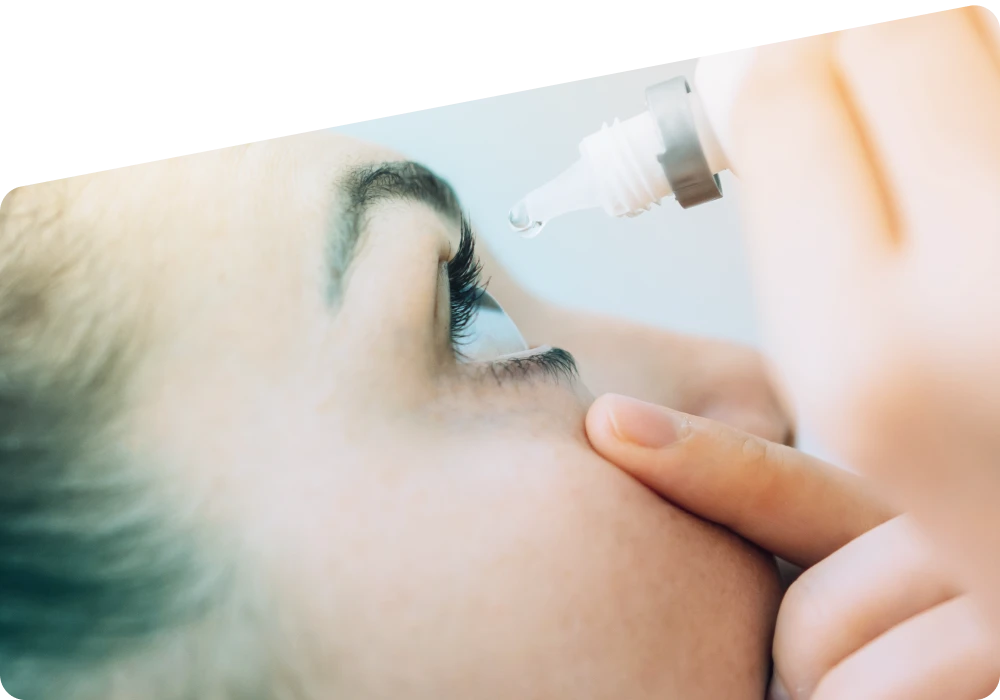
Cataract Eye Drops: Can They Treat Cataracts Without Surgery?
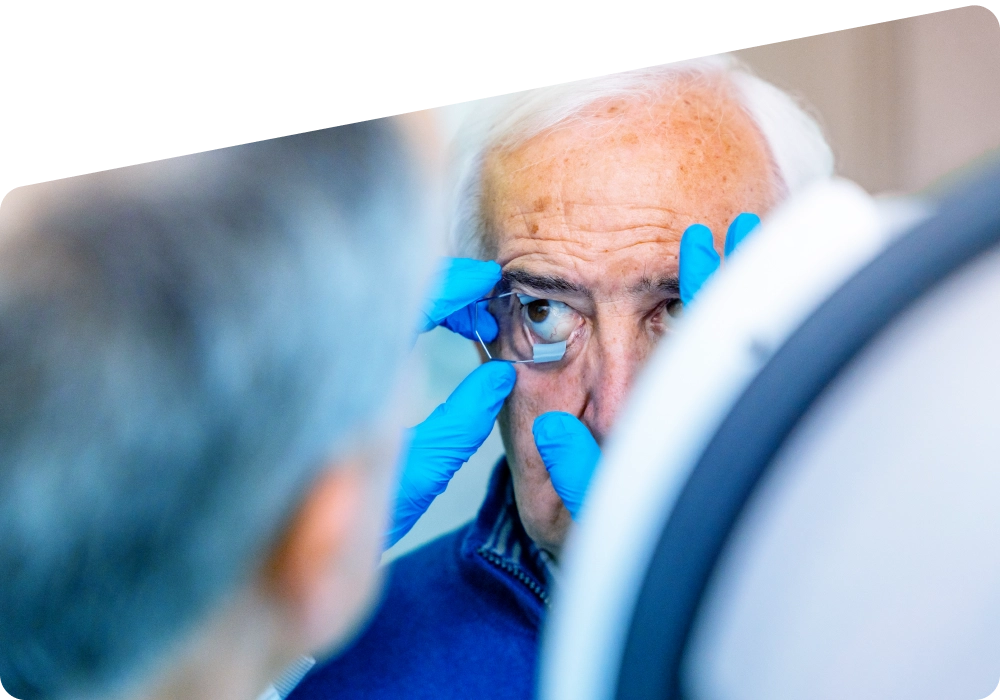
7 Cataract Symptoms and Early Signs You Should Know

Cataract Causes and Risk Factors Explained by Eye Specialists

What Is Cataract? Causes, Symptoms, and Early Signs